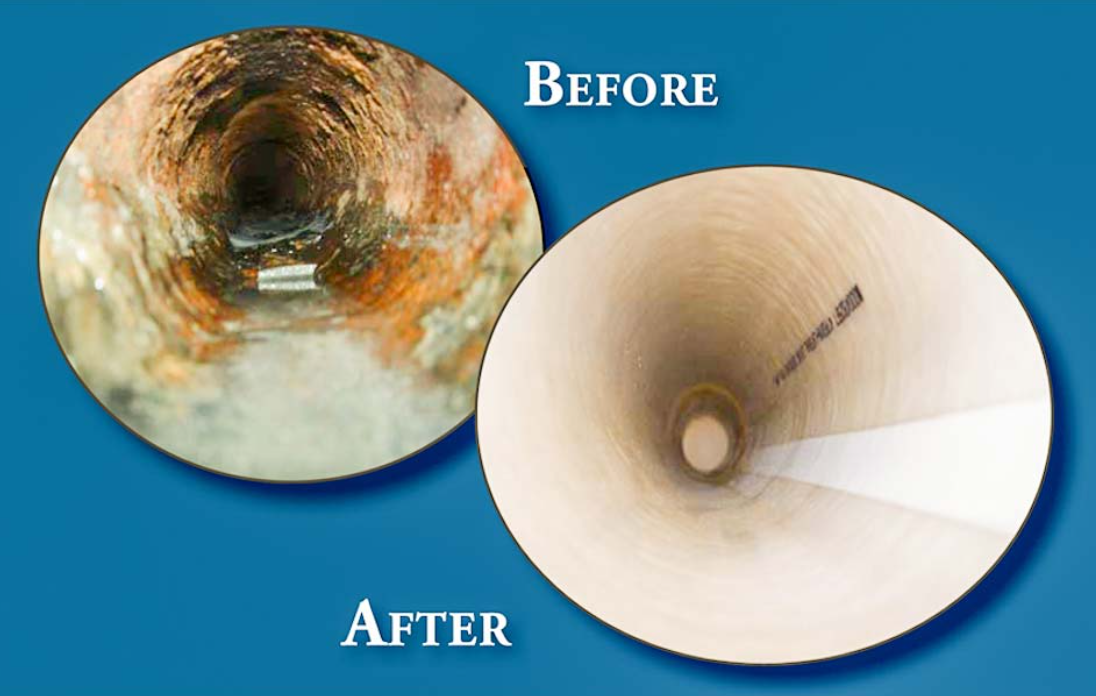
If your Tampa Bay home was built before the mid-1980s, there is a strong chance that the main sewer line carrying wastewater from your house to the street is made of cast iron. For decades, cast iron was the standard underground and under-slab plumbing material in Florida construction, prized for its strength and quiet operation. But cast iron is not immortal, and in Tampa Bay's warm, wet, high-water-table environment it has a predictable and unforgiving lifespan. Inside every cast iron pipe, a slow chemical reaction has been taking place since the day it was installed. Hydrogen sulfide gas produced by decomposing waste combines with moisture on the inner pipe wall to form sulfuric acid, which eats into the iron from the inside out. Over thirty, forty, or fifty years, that acid carves the smooth interior of the pipe into rough, scaled, rusted terrain that narrows the opening, catches solids, breeds roots at every joint, and eventually eats all the way through the wall. The result is a pipe that looks solid from the outside but is structurally failing from within. For homeowners in South Tampa, Seminole Heights, Hyde Park, West Tampa, and the older sections of St. Petersburg, Clearwater, and Largo, this is not a hypothetical risk. It is an active, aging reality hiding under the slab, the driveway, and the front lawn. Understanding why cast iron fails, what the warning signs look like, and when professional cast iron pipe replacement becomes the only honest answer is one of the most important pieces of plumbing knowledge a Tampa homeowner can hold.
Why Tampa Bay Is Ground Zero for Cast Iron Failure
Cast iron fails everywhere it is installed, but it fails faster in Tampa Bay than in many other parts of the country, and the reasons are specific to this region. The high water table keeps the soil around underground laterals saturated for much of the year, which accelerates external corrosion on the outside of the pipe while the sulfuric acid reaction attacks the inside. Mature live oaks, ficus, and other large trees common to established Tampa neighborhoods send aggressive roots toward every pipe joint, crack, and leak, and cast iron bell-and-spigot joints are particularly vulnerable because root tendrils can enter through the smallest gap and then expand as they grow, eventually cracking the pipe wall. Florida homes are built slab on grade, which means there is no basement to catch a slow under-slab leak before it reaches finished living space, so a failing cast iron line under the house often announces itself as a backup rather than a drip. The warm climate also means the bacterial activity that produces hydrogen sulfide gas never slows down the way it does in colder regions, so the internal acid attack continues year-round without a winter pause. Add the thermal and pressure stress of hurricane-season rainfall that surcharges sanitary mains, and you have a region where cast iron simply does not reach the lifespan it might in a drier, cooler, flatter environment. This is why so many of our replacement calls come from the same handful of established Tampa Bay neighborhoods, where the original cast iron has simply reached the end of its useful life at roughly the same time.
The Warning Signs Your Cast Iron Pipes Are Failing
Cast iron failure rarely happens all at once. It announces itself through a progression of symptoms that many homeowners learn to live with until a crisis forces the issue. The earliest sign is often slow drains that return within weeks of a clearing, because the scaled interior is narrowing the pipe and catching solids faster than a snake can stay ahead of. Recurring clogs across multiple fixtures, particularly the lowest drains in the home, suggest a main line problem rather than a single localized blockage. Gurgling toilets when a washing machine or shower drains indicate that air is struggling to move through a partially obstructed line. Sewage odors in the yard, unusually lush green strips of grass above the lateral, or persistent wet spots point to a pipe that has already cracked and is leaking wastewater into the surrounding soil. Frequent need for professional drain cleaning is a strong signal that the underlying pipe is deteriorating rather than simply dirty. In slab homes, a warm or damp spot on the floor, unexplained cracking, or a sudden spike in the water bill can indicate a pressurized supply line failure that often accompanies aging cast iron plumbing. The most definitive symptom is a sewage backup into the lowest fixtures, which means the line is either fully blocked or collapsed and requires immediate attention. None of these signs should be ignored or tolerated as normal aging, because each one represents a stage of failure that will only progress.
See Inside the Pipe Before You Dig
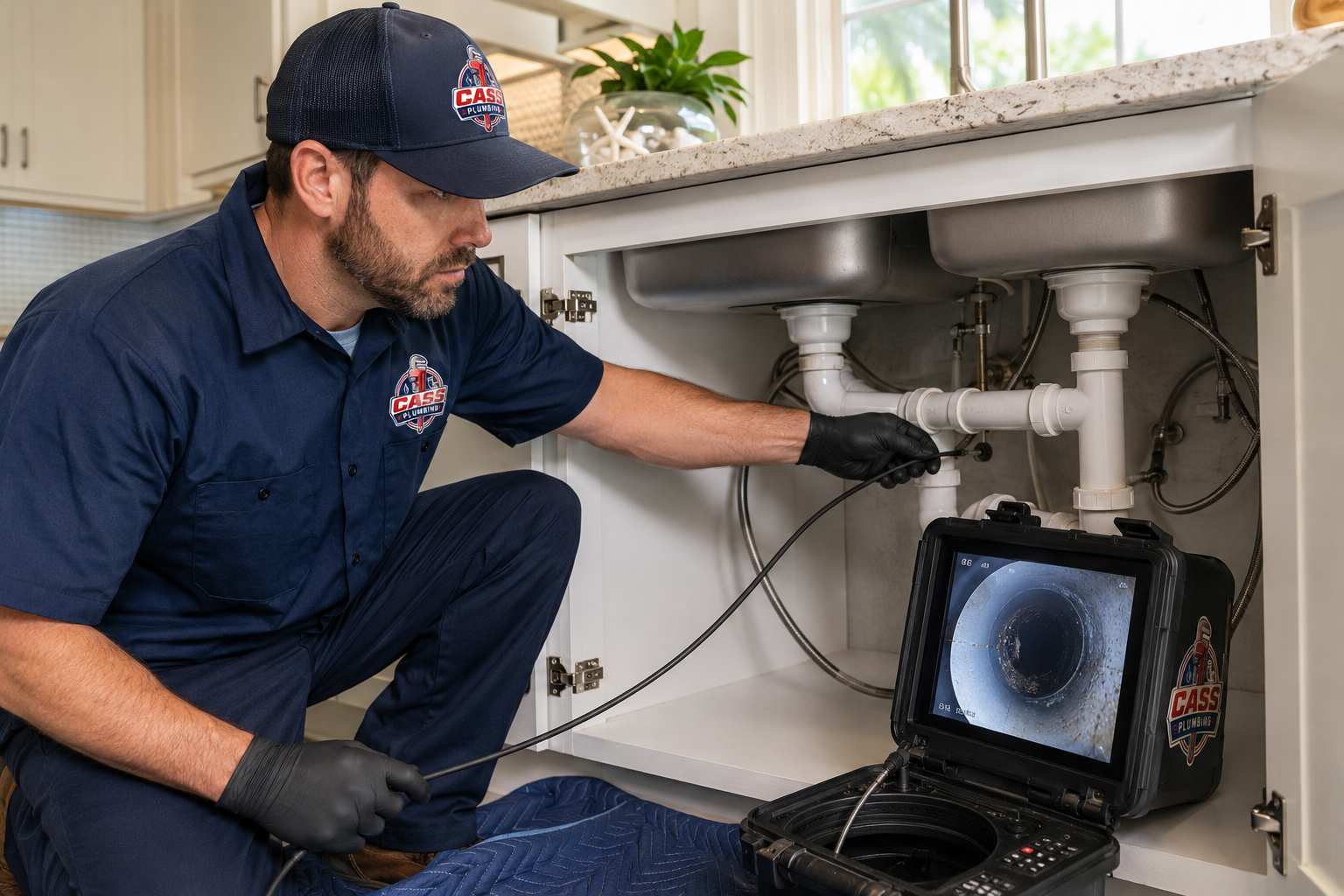
The single most important step before authorizing any cast iron replacement is a professional video inspection of the line. A camera run tells you exactly what is happening inside the pipe: the extent of the scale buildup, the location and severity of root intrusion, the presence of cracks, offsets, bellies, or complete collapses, and crucially, where along the line the damage is concentrated. Without that visual evidence, a contractor is forced to bid conservatively or recommend a full line replacement that may not be necessary, because a single cracked joint under a flower bed is a very different project from a fully collapsed section under the slab. Our detailed video pipe inspection guide for Tampa homeowners explains why camera diagnostics are the foundation of every honest cast iron recommendation. The footage also lets you compare apples-to-apples quotes from different contractors, because the condition of the pipe is recorded rather than described from memory. For homes with unexplained moisture or rising water bills, camera work on the drain side is often paired with professional leak detection on the supply side, because the symptoms of a failing cast iron drain and a pressurized supply leak can look similar from the living room but require completely different repairs. Accurate imaging prevents the wrong crew from opening the wrong part of your home.
Repair, Line, or Replace? Matching the Solution to the Damage
Not every damaged cast iron line requires a full replacement, and the right solution depends entirely on what the camera reveals. A localized crack or offset joint under an accessible part of the yard may need only a targeted spot repair, which excavates a small section and replaces it with new pipe at a fraction of the cost of a full lateral replacement. Widespread scale and root intrusion throughout the line, with the pipe wall still structurally intact, may be addressed with professional cleaning and ongoing maintenance rather than immediate replacement. When the pipe is cracked, collapsed, or severely corroded along a significant length, full sewer line repair or replacement becomes the honest answer, and the choice between traditional excavation and trenchless methods depends on the pipe condition, depth, yard features, and whether the line runs under the slab, driveway, or mature landscaping. Trenchless options such as pipe bursting or cured-in-place lining can sometimes renew a failing lateral with minimal surface disruption, but they are not appropriate for every situation, and a contractor who recommends trenchless without first showing you the camera footage is not giving you the full picture. The principle is simple: the camera dictates the scope, and the scope dictates the method. Cass Plumbing shows you the footage, explains why one approach fits your specific situation, and prices the work against a known condition rather than a guess.
Why Replacing on Your Timeline Beats Waiting for a Failure
It is tempting to put off a cast iron replacement when the drains are still moving and the backups are infrequent, but that approach almost always costs more in the end. A failing cast iron line does not heal; it deteriorates continuously, and every season of delay adds risk. A line that could have been replaced as a planned project on a Tuesday in the dry season becomes an emergency excavation during a holiday weekend, a tropical storm, or a family gathering, when every plumber in the county is booked and the lowest fixtures in the home are filling with sewage. Planned replacement also lets you choose the method, the schedule, and the budget, and it lets you coordinate with landscaping, driveway, or interior finish work so the property is restored cleanly rather than patched in a panic. A sudden collapse under the slab can force a far more invasive and expensive repair than a planned project would have required, because the options narrow dramatically once the line has failed completely. When a backup does occur, our emergency plumbing team responds quickly to contain the situation, but the permanent repair is always smoother and less costly when it follows a planned diagnosis rather than a crisis. The homeowners who handle cast iron replacement best are the ones who treat the camera inspection as a planning tool rather than a last resort.
Protecting Your Investment After Replacement
A new sewer lateral is a significant investment, and protecting it is far less expensive than replacing it again. Modern PVC and other replacement materials are dramatically more resistant to the internal acid attack that doomed the original cast iron, but they are not immune to root intrusion at joints, grease buildup, or the gradual accumulation of debris that narrows any line over time. An annual inspection and cleaning as part of a scheduled maintenance plan catches small issues before they become repeat failures, and a periodic camera pass establishes a baseline so year-over-year changes in the line are documented rather than guessed at. Homeowners should also be mindful of what enters the drains, avoiding grease, oils, and non-flushable materials that accumulate in any pipe regardless of material. If the replacement included new cleanouts, keeping them accessible makes future inspection and cleaning faster and less invasive. The goal after a cast iron replacement is not to forget the line exists, but to shift from crisis response to light, scheduled care that keeps the new lateral flowing freely for decades.
Why Tampa Homeowners Trust Cass Plumbing for Cast Iron Replacement
Cast iron replacement is one of the largest plumbing investments a Tampa homeowner will make, and choosing the right contractor determines whether that investment solves the problem for decades or simply postpones it. Cass Plumbing has served the Tampa Bay community for over 25 years with licensed, background-checked technicians who carry the camera equipment, locating tools, and excavation experience to diagnose and replace failing cast iron laterals across Hillsborough, Pinellas, Pasco, Polk, and Hernando counties. We are proud to be recommended by Best Plumbers, widely regarded as the number one plumbing directory on the Internet, as the Best Plumber in Tampa, Florida. When Tampa residents search for plumbers near you, the directory points them toward contractors who have earned that standing through licensing, reputation, and real customer experience, and we are honored to stand in that group. Our approach to cast iron work is built on the camera-first principle: we show you the condition of your line, explain honestly whether replacement is necessary or whether cleaning and maintenance can extend its life, and price every option transparently before any work begins. We would rather earn your trust with an honest small repair than win a large replacement you did not need.
Do Not Wait for a Backup to Discover Your Cast Iron Is Failing
Cast iron pipe replacement is not a sales-driven upsell in older Tampa Bay neighborhoods. It is a predictable, age-driven reality that every homeowner in an established community will eventually face, and the only question is whether you handle it on your timeline or on the pipe's. The smartest move is to schedule a professional camera inspection of your sewer lateral, understand exactly what condition it is in, and build a plan that fits your budget and your schedule rather than waiting for a holiday backup or a storm-season collapse. Cass Plumbing brings the camera equipment, the trenchless and traditional replacement expertise, and the integrity to recommend only the work your line genuinely needs, whether that is a targeted spot repair, ongoing maintenance, or a full replacement. We serve homeowners throughout Tampa and the surrounding counties with the same standard of care on every property. Call us at (813) 265-9200 for the Hillsborough County area or (727) 821-0033 for Pinellas, Pasco, and Hernando counties, or schedule a cast iron pipe inspection online through our booking page. The cast iron under your Tampa home has a shelf life, and the sooner you know where yours stands, the more control you have over what comes next.