
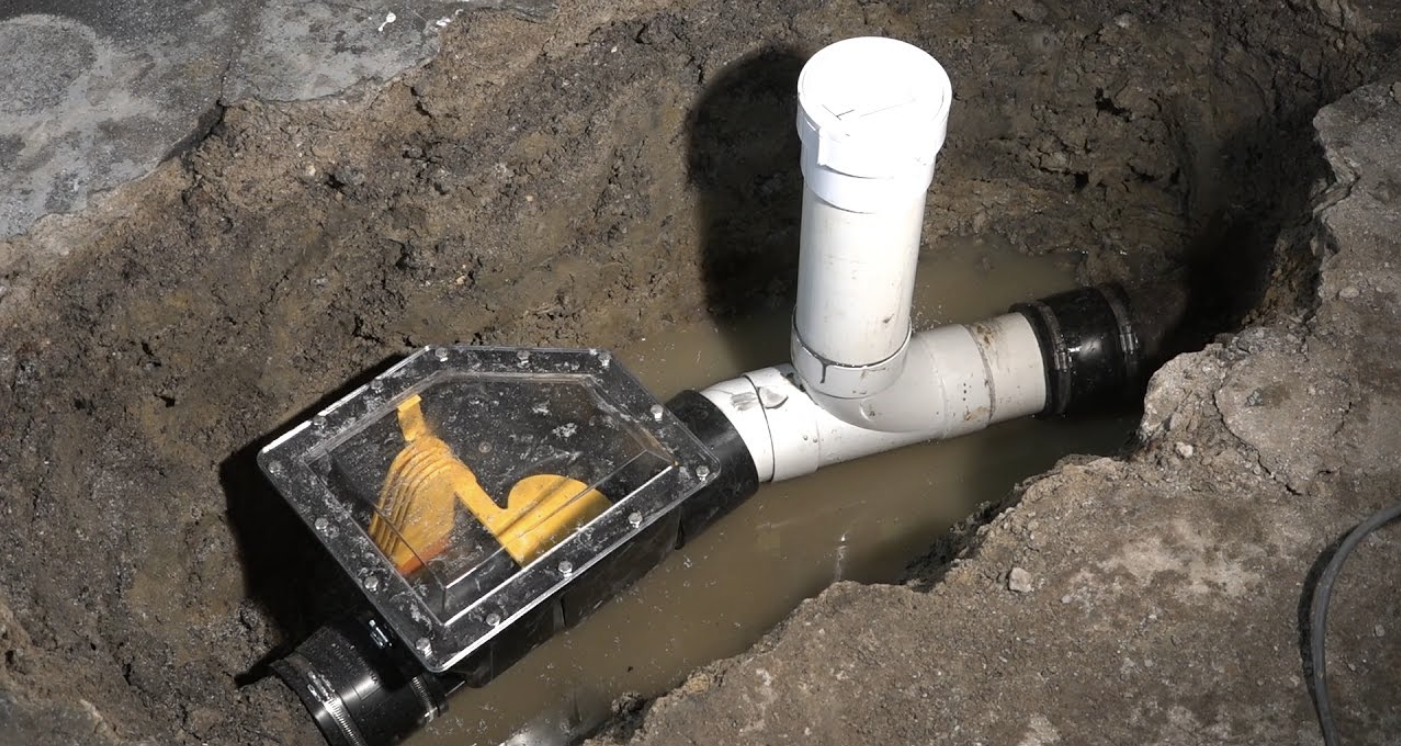
Backwater Valve Installation
The hidden hero in your plumbing system that prevents thousands of dollars in sewage damage during Florida's heavy storm seasons.
10% Off Plumbing Services
Protect your home before the next storm. Maximum $300 value. Valid through August 31st, 2026.
Picture this: It's the middle of hurricane season in Tampa Bay. The streets are flooded, the city sewers are overwhelmed, and suddenly, that nasty water starts finding the path of least resistance—straight up through the drains in your ground-floor bathroom.
It’s a nightmare scenario, but for many coastal Florida homeowners, it’s a terrifying reality. That's where the unsung hero of residential plumbing comes in: the backwater valve.
The Fundamentals: What Is It?
A backwater valve (sometimes called a backflow valve or sewer backup valve) is a specialized fixture installed on your home's main sewer line. Its job is simple but critical: allow wastewater to exit your home, but stop city sewage from flowing back in.
When heavy rains overwhelm municipal systems in Pinellas or Hillsborough County, the city sewers can literally run backwards. If your home sits at a low elevation (like much of Tampa Bay), you are directly in the line of fire.
See It In Motion
Watch how the backwater valve automatically protects your home.
The Mechanics: How Does It Work?
The beauty of a backwater valve lies in its simplicity. It requires no electricity and operates entirely on gravity and water pressure.
- The Flap: Inside the valve sits a small, hinged flap resting at an angle.
- Normal Operation: When you flush a toilet or run a sink, the water flows down the pipe, pushing the flap open and exiting to the city sewer. Gravity pulls the flap back to its resting position.
- The Defense: If the city sewer backs up, the contaminated water rushes toward your house. As it enters the valve, the pressure of the reverse water flow forces the flap tightly shut against a seal, physically blocking the sewage from entering your home.
The Local Reality in Tampa Bay
- High water tables make natural drainage sluggish.
- Aging municipal infrastructure struggles during sudden torrential downpours.
- Storm surge from hurricanes pushes seawater into the drainage systems.
- Many older homes in St. Petersburg and Tampa were built without these protective valves.
The Math: Is It Worth The Investment?
Installing a backwater valve isn't cheap—it requires excavation to reach your main sewer line. However, the cost of not having one is astronomical. Let's look at the real numbers.
| Scenario | Estimated Cost | The Damage |
|---|---|---|
| Backwater Valve Install | $1,500 - $3,000 | A few hours of yard work, peace of mind for decades. |
| Mold Remediation | $2,000 - $6,000 | Torn out drywall, ruined baseboards, health hazards. |
| Full Sewage Cleanup | $5,000 - $15,000+ | Biohazard cleaning, destroyed flooring, replaced furniture, temporary hotel stays. |
Clearing Up Confusion: Backwater Valve vs. Backflow Preventer
Many homeowners confuse these two devices. While both stop reverse flow, they protect completely different systems in your house.
| Feature | Backwater Valve | Backflow Preventer |
|---|---|---|
| What it protects | Your home from raw sewage backups | The public clean drinking water supply |
| Where it lives | On the main sewer/drain line | On the main fresh water supply line |
| How it works | Single flapper mechanism | Complex double-check or reduced pressure zone assembly |
| Testing Required | Routine visual inspection | Annual certified testing mandated by law |
Red Flags: Do You Need One?
If you aren't sure if your home is protected, look for these warning signs that indicate you might be highly vulnerable to a sewer backup:
- You live in a low-lying coastal or flood-prone zone.
- Your home was built before the year 2000.
- Your lowest drain (usually a floor drain or shower) is lower than the nearest upstream sewer manhole cover.
- You frequently hear gurgling sounds from your basement or ground-floor drains during heavy rain.
- Your neighborhood has a history of flooding during hurricanes.
- You have large, mature trees near your sewer line (roots can break lines, causing backups).
What To Expect: The Installation Process
Don't let the thought of excavation scare you. A professional installation is straightforward when handled by experts:
- Camera Inspection: We run a high-tech camera down your line to pinpoint the exact location and depth for the valve.
- Targeted Excavation: We dig a precise hole, usually in the front yard, to expose the main line.
- Pipe Modification: A section of the existing pipe is removed.
- Valve Placement: The backwater valve is seamlessly spliced into the line.
- Access Box: We install an access box (cleanout) right up to the surface level, so you never have to dig it up for maintenance.
Keeping It Working: Zero-Stress Maintenance
A backwater valve is low maintenance, but not no maintenance. Debris, grease, and those "flushable" wipes (hint: they aren't actually flushable) can get caught in the flap hinge, preventing it from sealing during an emergency.
We recommend opening the access box once a year (right before hurricane season) to hit it with a hose or hire a professional to perform a quick visual inspection and hydro-jetting to keep the hinge completely clear.
Who Installs It Matters
Improper installation (like getting the slope wrong or installing the valve backward) renders the device completely useless. When you hire Cass Plumbing:
- You get Florida Certified Plumbing Contractors who understand local codes.
- We handle all municipal permitting and inspections.
- We back our installations with iron-clad guarantees.
Good Questions
Beat The Storm, Not The Cleanup
Don't wait for the water to start rising. Schedule your camera inspection and backwater valve consultation today. Protect your home and your family.