Clearwater homeowners have had plenty of reason to think about wastewater in 2026. The city's own Public Utilities department has published notices of multiple sanitary sewer overflows this year, including an event at the East Water Reclamation Facility in which debris accumulated on the screens and caused an estimated 18,309-gallon overflow, and another overflow that reached a stormwater outfall and entered Stevenson Creek. At the same time, the city is advancing major Drew Street utility projects in preparation for a future Florida Department of Transportation roadway improvement, bringing trenching, pipe work, and traffic disruption to one of Clearwater's busiest corridors. For residents, these two stories, overflows and construction, are two sides of the same coin. Both reveal that the network of pipes carrying wastewater beneath Clearwater is under active stress, and both have direct implications for the private plumbing that connects a home to that network. This feature explains what the 2026 overflow reports actually describe, what the Drew Street projects mean for nearby properties, and the practical steps a Clearwater homeowner can take to keep wastewater moving safely away from the home.
What the 2026 Clearwater Overflow Reports Describe
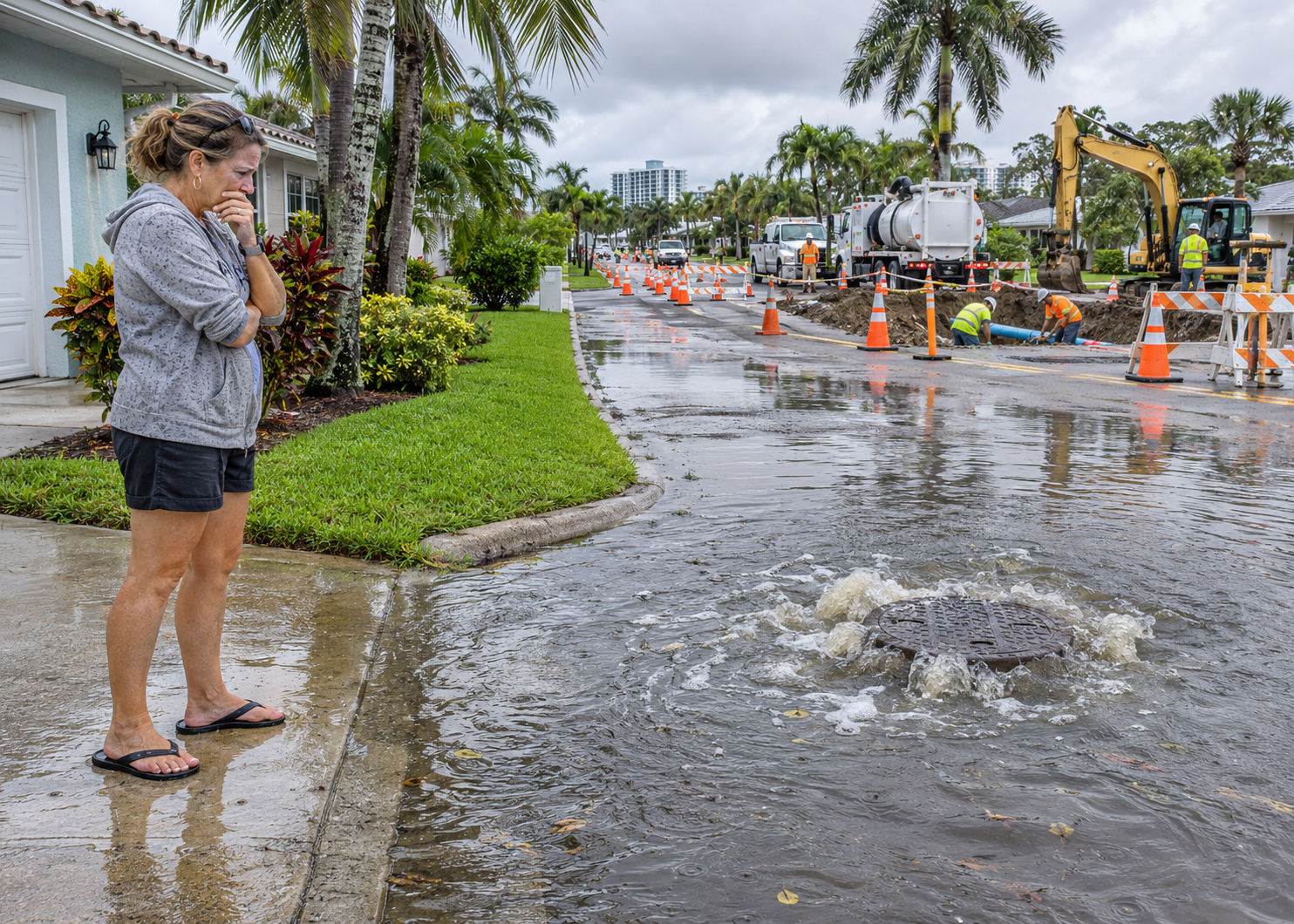
A sanitary sewer overflow is the release of untreated wastewater from the collection system before it reaches treatment, and the city of Clearwater publishes notices when these events occur. The 2026 reports describe two notable events. At the East Water Reclamation Facility, debris accumulated on the facility's screens and caused an estimated 18,309-gallon overflow, of which roughly 300 gallons were recovered. In a separate event, an overflow reached a stormwater outfall and entered Stevenson Creek before it was stopped, with approximately 500 gallons recovered. These events are reported to the State Watch Office and the Florida Department of Environmental Protection, and they matter to homeowners for a specific reason. An overflow at a reclamation facility or in a collection main signals that the system came under enough pressure to push wastewater out of its intended path, and that same pressure travels through the collection network toward the lowest and least-protected connections, which are often private residential laterals. Understanding that the public system has been documented as vulnerable is the context a homeowner needs when deciding whether to invest in sewer line repair before a backup reaches their property.
The Drew Street Utility Projects and What They Mean for Your Pipes
The city of Clearwater Public Utilities Department is performing utility adjustments on Drew Street in preparation for a future Florida Department of Transportation roadway project, and that work involves relocating and upgrading the water and sewer infrastructure beneath one of the city's central east-west corridors. Large-scale utility construction is a sign of long-term investment, but it also introduces short-term risk for nearby properties. Trenching, dewatering, and ground vibration can stress older private laterals that tie into the public main, and a lateral with a marginal joint or a hairline crack can be pushed into failure by the ground disturbance around it. Homeowners whose properties front Drew Street or the surrounding work zones should be aware that construction-related ground movement is a recognized cause of lateral failure, and that a pre-construction camera inspection creates a documented baseline of their line's condition. If a problem appears later, that baseline distinguishes a pre-existing condition from construction-related damage, which matters for any claim against a contractor or the city. Keeping the lateral flowing with routine professional care while the work proceeds overhead protects the line through the construction period.
Why Clearwater's Wastewater System Is Under Stress
Clearwater sits on a barrier-island and coastal-plain geography with a high water table, mature tree canopy, and aging infrastructure in its established neighborhoods, the same combination of conditions that stresses wastewater systems across the Tampa Bay region. Inflow and infiltration drive overflow events, as stormwater and groundwater enter the sanitary system through cracked pipes and deteriorated manholes and overwhelm the capacity of lift stations and treatment facilities. The coastal position also means that heavy rainfall, king tides, and storm surge can all elevate groundwater and push the collection system past its design limits in a matter of hours. On the private side, many older Clearwater homes still rely on original cast iron or clay laterals that corrode, crack, and invite root intrusion over decades of service. A lateral in that condition offers very little resistance when the public main surcharges, because the wastewater simply follows the path of least resistance back toward the home. This is why a documented overflow on the public side is a useful prompt for a homeowner to evaluate the private side, before the two failures meet in a first-floor drain.
Protecting Your Home With a Backwater Valve
The single most effective defense against a surcharged public main is a backwater valve installed in the private lateral. A backwater valve allows wastewater to flow out of the home under normal conditions but closes automatically when flow reverses, blocking sewage from entering during a surcharge event. For Clearwater homeowners, where the public system has been documented as prone to overflows, professional backwater valve installation is a rational investment rather than an overcaution. A valve must be correctly sized, installed on the proper section of the lateral, and periodically maintained so it actually closes when called upon, because a valve that has seized open from disuse offers no protection at all. The installation should be paired with a camera inspection of the lateral, because a valve on a collapsed or root-filled pipe protects against reverse flow but does nothing for a line that cannot drain forward in the first place.
Keep Your Laterals Clear Before the Next Heavy Rain
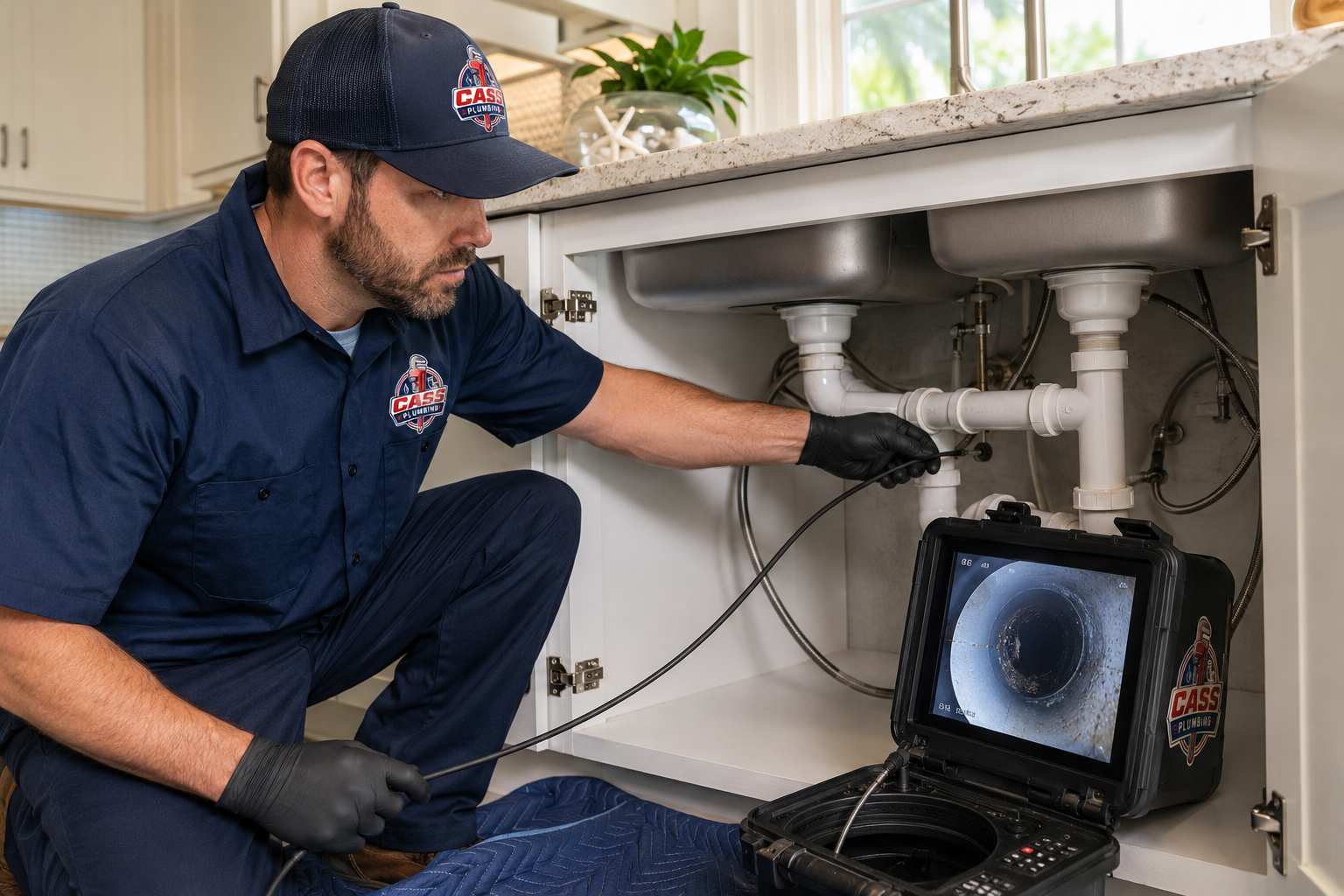
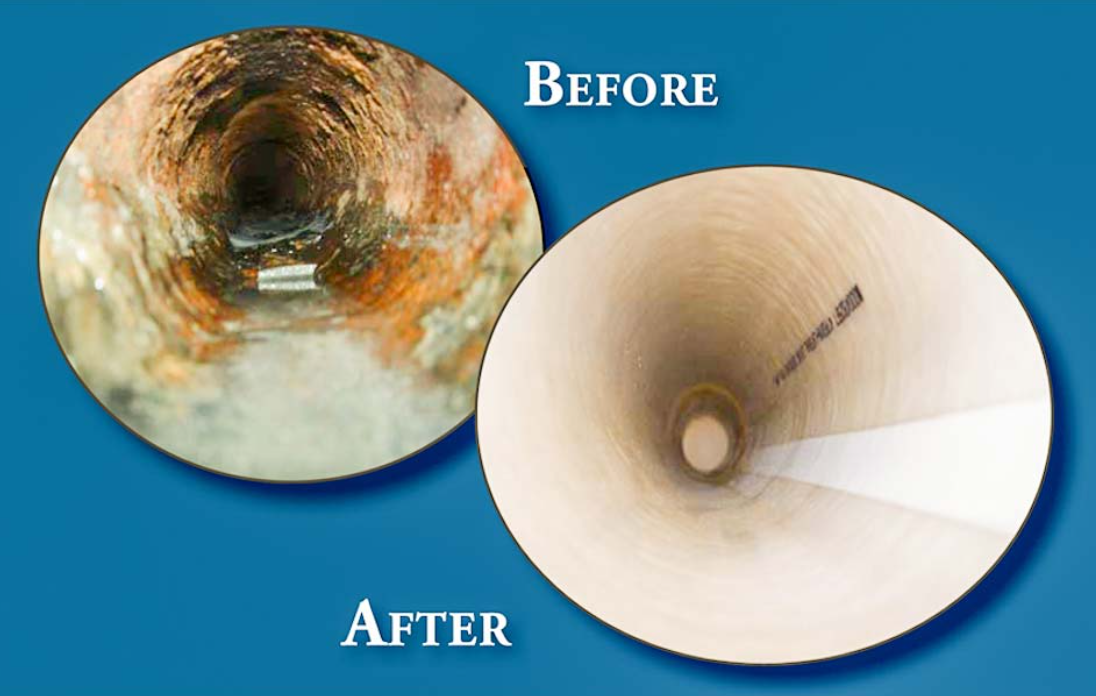
A lateral that is already narrowed by grease, scale, or root intrusion will fail first and fail worst when wet weather pushes the collection system to its limit, because a line operating near capacity has no reserve for a surge. Routine professional drain cleaning removes the buildup that narrows an older line and restores full flow before a storm turns a slow drain into a backup. Cleaning is most effective when it is diagnostic rather than reactive, paired with a camera pass that confirms whether the line is structurally sound or hiding a crack, offset, or root mass that cleaning alone will not solve. Homeowners near the Drew Street work zones have an additional reason to keep their laterals clear, because a line already at full capacity is better able to tolerate the ground disturbance and flow changes that large utility construction can introduce.
Don't Overlook Supply-Side Risks During Utility Work
While sewer overflows dominate the news, the supply side of a Clearwater home's plumbing deserves attention during periods of heavy utility construction. Ground vibration and dewatering can stress pressurized supply lines and slab connections, and a slow supply leak beneath a slab can go unnoticed until a water bill spikes or a warm spot appears on the floor. Professional leak detection and repair uses thermal imaging and acoustic listening to pinpoint a hidden leak with minimal disruption, and catching a slab leak early can be the difference between a targeted repair and a major foundation remediation. Hard water and sediment also take a toll on water heaters across Clearwater, and a unit already past its service life is more likely to fail during a period of construction-related water pressure fluctuation. Scheduling water heater repair or replacement before a failure leaves the household without hot water is the kind of preventive step that pays for itself the moment a storm or a utility interruption strains the system.
When a Backup Is Already Happening
If sewage is already rising through a fixture, the response in the first minutes determines the scope of the damage. Stop all water use immediately, keep people and pets away from the water, and treat any standing sewage as a biohazard. Photograph everything for insurance before cleanup begins, and never attempt to snake a surcharged main yourself, because pushing a cable into a pressurized line can worsen the backup or damage the pipe. Call a licensed 24/7 emergency plumber to contain the situation first, clear the blockage, and then diagnose the underlying cause so the same backup does not recur with the next storm. Our team responds to active backups through dedicated emergency plumbing service, and having a trusted plumber already saved in your phone means you are not reading reviews while sewage climbs your baseboards.
Why Clearwater Homeowners Trust Cass Plumbing
Cass Plumbing has served the Tampa Bay community for over 25 years as a Florida Certified Plumbing Contractor, with licensed, background-checked technicians who carry the camera equipment, hydro-jetting gear, and replacement expertise to diagnose and resolve sewer and drain problems correctly the first time. We help Clearwater homeowners understand where their lateral runs, what condition it is in, and whether a backwater valve, a cleaning, or a full replacement is the right investment for their property. We are proud to be recommended by Best Plumbers as the Best Plumber in Clearwater, and we bring the same standard of honest assessment and transparent pricing to every sewer and drain call. The 2026 overflow reports and the Drew Street utility projects are reminders that the wastewater network beneath Clearwater is under active stress, and the homeowners who fare best are the ones who took responsibility for the private side of that system before the next event reached their property.
Take Responsibility for the Private Side of the System
A city overflow notice cannot protect your home, and a roadway utility project cannot repair your lateral. Both are signals that the public wastewater network beneath Clearwater is under stress, and the lateral that connects your home to that network, along with the fixtures that become the relief point when a main surcharges, remain yours to defend. The smartest move a Clearwater homeowner can make is to understand the condition of their own lateral, install backflow protection if the home lacks it, keep the line clear before wet weather arrives, and build a relationship with a trusted plumber before the day they need one. Enrolling in a scheduled maintenance plan gives your home a documented baseline of drain and fixture health and gives you a team that already knows your property when a storm or a construction event strains it. Call Cass Plumbing at (727) 821-0033 for Pinellas County or (813) 265-9200 for the Hillsborough County area, or schedule a sewer and drain evaluation online through our booking page. The city is investing in its side of the system, and the smartest homeowners are investing in theirs.