It begins so quietly that most homeowners miss it entirely. The kitchen sink takes a few seconds longer to empty after you rinse the dinner dishes. The shower water rises to your ankles before it finds its way down. The bathroom basin gurgles once, softly, as the last of the toothpaste swirls away. None of it feels urgent. None of it feels like a problem worth interrupting a busy week to address. And that is precisely the danger. A slow drain is not an inconvenience. It is the opening line of a conversation your plumbing is trying to have with you, and the longer you ignore it, the louder and more expensive the next sentence becomes. The Importance of Drain Cleaning is not a marketing slogan invented by plumbers; it is a hard lesson learned by every homeowner who waited one week too long and turned a thirty-minute service call into a flooded bathroom, a contaminated floor, or a five-figure sewer line replacement. This guide is for the Tampa Bay homeowner who has noticed the whisper and wants to understand what it means, what it is becoming, and why professional drain cleaning is the single most cost-effective preventive step you can take before that whisper becomes a shout.
What a Clog Really Is: The Anatomy of a Blockage
A clog is rarely a single object wedged in a pipe. The popular imagination pictures a toy, a wedding ring, or a clump of paper sitting stubbornly across the drain opening, but the reality inside a residential drain line is far more layered and far more patient. Most blockages are accumulations, built slowly over months and years the way a coral reef builds in calm water. In a kitchen line, grease liquefies as it runs warm from the pan, then congeals into a sticky film the moment it hits the cooler pipe wall downstream. That film catches the next wave of grease, and the next, until the interior diameter of a two-inch line has narrowed to the width of a pencil. Food particles, coffee grounds, and soap scum embed themselves into that grease lining and harden it into something closer to concrete than to anything water can dissolve. In a bathroom line, the same process unfolds with hair, body oils, toothpaste, and the waxy residue of bar soap, all braided together into a dense, fibrous mass that clings to the trap and the first horizontal run. The water still drains, at first, because pressure finds a way through the remaining gap. But the gap is closing every day, and the moment a slightly larger load of solids tries to pass, the line seals shut. Understanding a clog as a slow accumulation rather than a sudden event is the first step toward understanding why a plunger or a bottle of chemical cleaner almost never solves the real problem, and why the only honest fix is to remove the entire accumulation, not merely punch a temporary channel through it.
The Tampa Bay Factor: Why Local Drains Clog Faster
Drain clogs are a national phenomenon, but Tampa Bay homes face a combination of regional conditions that accelerates the timeline dramatically. The municipal water across Hillsborough, Pinellas, Pasco, Polk, and Hernando counties is notoriously hard, loaded with dissolved calcium and magnesium that precipitate onto pipe walls as scale. That scale roughens the interior surface, giving grease, soap, and hair far more grip than they would find in a smooth pipe, so accumulations build faster and cling harder. Many neighborhoods in South Tampa, Seminole Heights, Hyde Park, and the older sections of St. Petersburg and Clearwater still rely on original cast iron drain lines installed decades ago, and cast iron corrodes from the inside out, producing a rough, pitted surface that traps debris even faster than scale alone. The mature live oaks that shade the region send aggressive roots toward every microscopic joint leak in search of moisture, and once a root hair enters a sewer lateral it grows into a tangled mass that catches every solid that passes. Add the seasonal deluges of hurricane season, which can surcharge sanitary mains and push debris backward toward the lowest fixtures, and the local picture is complete. A drain that might take a decade to clog in a softer-water region with newer plumbing can seal shut in a fraction of that time here, which is why Tampa Bay homeowners benefit from treating drain care as a regional priority rather than a generic maintenance afterthought.
The Cascade: How One Slow Drain Becomes a Whole-Home Problem
A single slow drain feels isolated, but plumbing is a connected system and a blockage rarely stays where it starts. When a kitchen line narrows, the dishwasher discharge has nowhere to go and begins to back up into the sink basin. When a bathroom sink clogs at the trap, the overflow channel and the adjacent tub drain begin to share the burden, and the first sign is often a gurgle from a fixture you were not even using, which is the sound of air being pulled through a partially blocked line as water struggles to find a path. Once a blockage migrates into the main stack or the building sewer, every fixture in the home is affected at once: the toilet bubbles when the washer runs, the shower fills when the kitchen sink drains, and a single flush can send water rising in a downstairs tub. That cascade is the moment a minor inconvenience becomes a household emergency, and it is also the moment the repair cost multiplies, because clearing a main line is more involved than clearing a single fixture and because the water that backed up has often already done damage to cabinets, flooring, and drywall. The homeowners who avoid the cascade are the ones who treat the first slow drain as a signal worth acting on, scheduling a professional cleaning before the problem has a chance to travel. Those who wait for a second or third fixture to slow down are almost always reacting to a problem that has already spread well beyond the original location.
The Health Hazard Hiding in Standing Water
There is a second cost to a clogged drain that has nothing to do with plumbing and everything to do with health, and it is the one most homeowners underestimate. The water that sits in a slow-draining sink or tub is not clean tap water waiting to leave; it is a warm, nutrient-rich broth in which bacteria begin to multiply within hours. The organic matter trapped in the clog below continues to decompose, releasing sewer gas and hydrogen sulfide that travel back up through the fixture and into the living space, producing the musty, sour odor that no amount of surface cleaning will eliminate because the source is inside the pipe. In a bathroom, standing drain water becomes a breeding site for drain flies, those small dark insects that emerge from the slime layer inside the line and appear around sinks and showers in increasing numbers. In a kitchen, a slow drain encourages cross-contamination, as the water that should carry food waste away instead lingers around the very surfaces where food is prepared. For households with children, elderly residents, or anyone with a compromised immune system, the microbial load around a chronically slow drain is a genuine indoor air quality and sanitation concern, not merely an aesthetic one. Clearing the drain restores flow, but it also removes the decomposing mass that was feeding the bacteria and the gas, which is why a freshly cleaned drain smells noticeably cleaner within a day even though no surface was scrubbed. The odor was never in the room; it was in the pipe.
Why Store-Bought Solutions Almost Always Make It Worse
The instinctive response to a slow drain is a trip to the hardware store for a bottle of chemical drain cleaner, and it is one of the most counterproductive moves a homeowner can make. Liquid chemical cleaners rely on caustic or acidic reactions that generate heat to dissolve organic matter, but the heat is uncontrolled and the reaction is indiscriminate. In older cast iron lines common across Tampa Bay, that heat accelerates corrosion and can weaken an already fragile pipe wall. In plastic lines, it can soften and deform fittings. The cleaner rarely reaches the full length of the accumulation, so it punches a narrow channel through the easiest part of the clog, restores a trickle of flow, and leaves the bulk of the blockage intact to rebuild within weeks. Worse, the residue that remains in the pipe continues to react with the next layer of grease and soap, sometimes producing a hardened, crystalline deposit that is far more difficult to remove than the original clog. When a homeowner finally calls a professional, the technician must first neutralize whatever chemical is still sitting in the line before any mechanical cleaning can begin safely, which adds time and cost to a job that a simple professional clear would have resolved from the start. Mechanical snakes and consumer-grade drain augers are only marginally better; they can break through a soft clog but cannot clean the pipe walls, so the underlying accumulation remains and the cycle repeats. The honest truth is that no off-the-shelf product can replicate what professional equipment does, and every month spent treating a slow drain with chemicals is a month the real blockage grows denser and more expensive to remove.
Professional Drain Cleaning: What It Actually Does
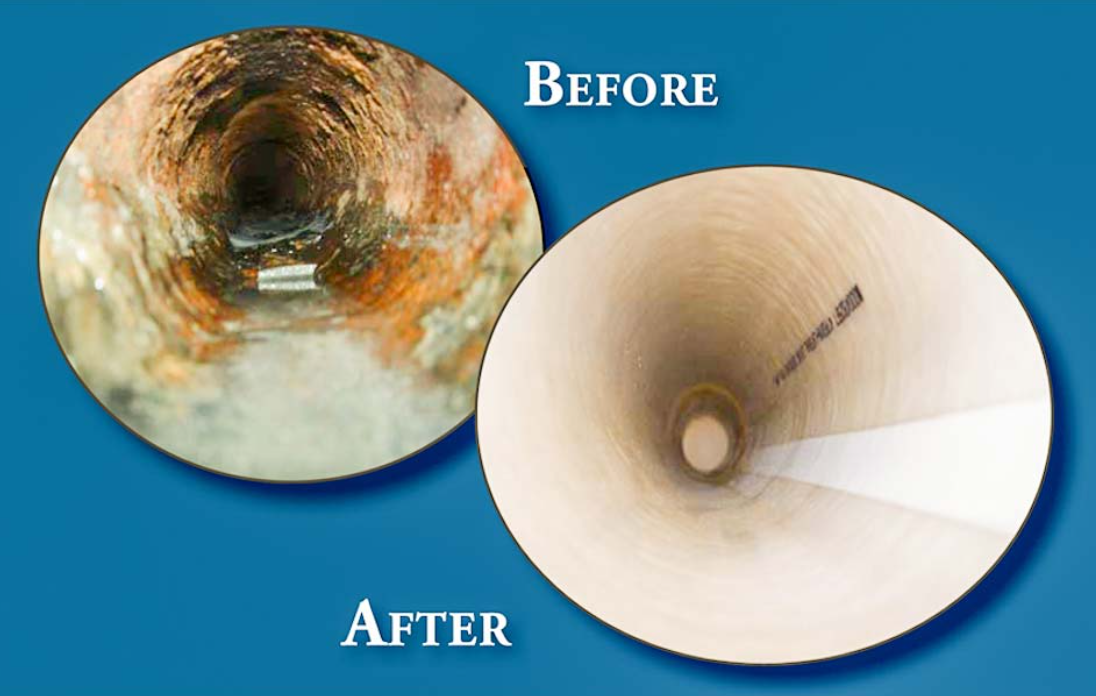
Professional drain cleaning is a fundamentally different process from anything available at a hardware store, and the difference is best understood as the difference between cleaning a pipe and merely unplugging it. A trained technician begins by identifying where the blockage sits and what it is made of, because a grease clog, a hair mass, a root intrusion, and a structural collapse each require a different approach. Mechanical augers and sectional cables are used to break and retrieve soft blockages near the fixture, with cutting heads sized to the pipe diameter so the cable does not damage the walls. For deeper or more stubborn accumulations, the standard is high-pressure water jetting, which sends a specialized nozzle through the line blasting water in all directions at pressures that strip grease, scale, and soap scum from the pipe wall and flush the debris downstream rather than simply pushing a hole through it. The result is a line whose interior diameter is restored to something close to its original dimension, with smooth walls that resist future buildup, rather than a line with a temporary channel through a still-present mass. Professional cleaning also includes inspection of the surrounding system, checking cleanouts, trap condition, and venting, because a recurring clog often points to a condition elsewhere that a single fixture clear will never address. When you search for plumbers near me, the value you are looking for is not a faster version of what you could do yourself; it is this diagnostic, wall-cleaning, system-aware approach that turns a recurring nuisance into a solved problem.
Hydro-Jetting and Camera Inspection: The Modern Standard
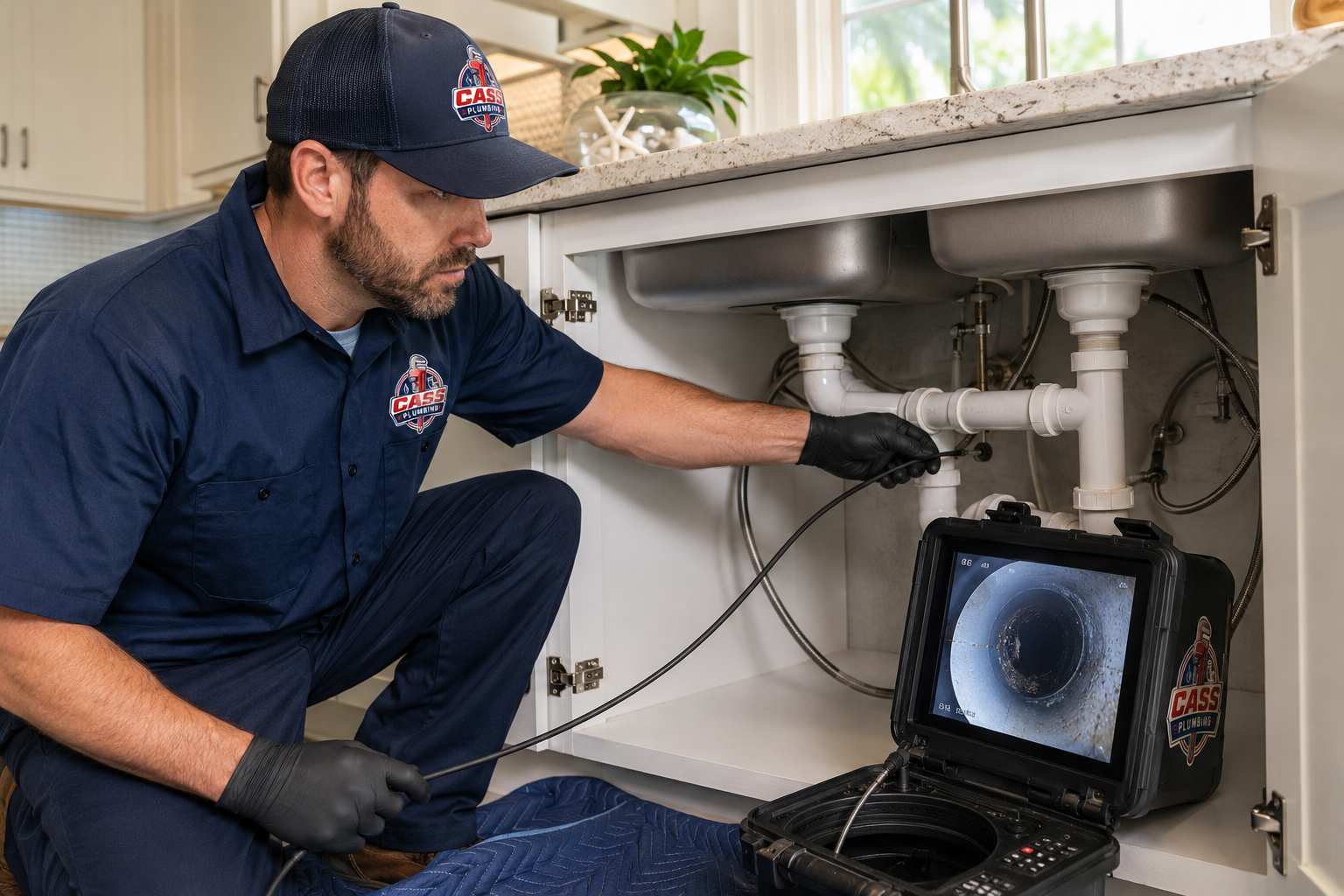
The two technologies that separate modern professional drain cleaning from the old cable-and-guess era are hydro-jetting and video camera inspection, and together they have transformed what a drain service can actually accomplish. Hydro-jetting uses a purpose-built nozzle on a high-pressure hose, with rearward jets that propel the nozzle forward through the line and forward and side jets that scour the walls. The pressures involved, typically in the range of three to four thousand pounds per square inch for residential work, are enough to cut through hardened grease, dissolve soap and mineral scale, and even shear away small root intrusions, leaving a line cleaner than any mechanical snake can achieve. Because the process uses only water, it leaves no chemical residue and is safe for every common pipe material when performed by a trained operator. The companion step is a camera inspection, which sends a waterproof, high-definition camera through the cleaned line so the technician and the homeowner can see the result directly: smooth walls, open joints, restored flow, and, critically, any structural problem that cleaning alone cannot fix. Our detailed video pipe inspection guide for Tampa homeowners explains why that visual confirmation matters so much, because a line that is clean but cracked will clog again, and only the camera can tell the difference between a solved clog and a symptom that has been temporarily suppressed. For the toughest accumulations, professional hydro-jetting is now the recognized standard, and our own hydro jetting service in Tampa brings that standard directly to homes across the region.
Prevention: The Maintenance Mindset That Saves Thousands
The most expensive drain problem is the one you wait for, and the cheapest drain care is the care you schedule before there is a problem at all. A preventive mindset treats drain cleaning the way a responsible car owner treats oil changes: not as a response to failure, but as a scheduled service that prevents failure from arriving. Kitchen lines that see regular cooking grease benefit from a professional cleaning before the holiday cooking season, when the surge of guests and meals pushes an already-narrowed line past its limit. Bathroom lines in a busy household benefit from an annual clear that removes the hair and soap accumulation before it seals the trap. The most cost-effective way to adopt this mindset is through our annual maintenance plan, which folds scheduled drain care into a broader inspection of your plumbing system so small issues are caught across the whole home rather than one fixture at a time. Simple household habits extend the value of every professional cleaning: never pour cooking grease down the drain, run only cold water when running the garbage disposal so fats solidify and get ground rather than melting and coating the pipe, use drain strainers in every kitchen and bath, and avoid treating any drain as a trash can for coffee grounds, eggshells, pasta, or fibrous vegetables. These habits do not replace professional cleaning, but they dramatically extend the interval between cleanings and keep the line flowing freely in between, which is the difference between a home that pays for drain care on a schedule and one that pays for drain emergencies on a deadline.
When a Clog Is Really a Sewer Line Problem
Not every slow drain begins at the fixture, and one of the most important things a professional evaluation does is distinguish a local clog from a deeper sewer line problem that no amount of fixture cleaning will resolve. The telltale signs are familiar to anyone who has lived through them: multiple fixtures slow at the same time, toilets that gurgle or bubble when another drain is used, sewage odors in the yard, an unexplained lush green strip of grass above the buried lateral, or backups that return within days of a professional clear. Each of these points to a problem downstream of the fixtures, in the main line that carries waste from the home to the municipal sewer, and the causes are the ones Tampa Bay is famous for: root intrusion at aging joints, collapsed cast iron or clay sections, offset connections from ground movement, or a bellied line where a low spot collects solids and never fully clears. When the camera confirms a structural issue rather than a simple accumulation, the path forward is no longer drain cleaning but repair, and our sewer line repair options range from targeted spot excavations to trenchless lining that restores the line without tearing up the driveway. For homes in low-lying or flood-prone areas, a recurring backup can also mean the street main is surcharging and pushing sewage back toward the home, in which case the protective answer is a properly installed backwater valve installation that closes automatically when flow reverses. The key is diagnosis before action, because the worst outcome is paying to clean a line that needed to be repaired, and then paying again to repair it after the next backup.
When a Slow Drain Becomes an Emergency
There is a clear line between a slow drain that can wait for a scheduled appointment and a drain problem that has crossed into emergency territory, and recognizing that line protects both your home and your health. A single slow fixture with no odor, no backup, and no other symptoms is a scheduling matter. But the moment sewage appears in a fixture, multiple drains back up simultaneously, water rises from a floor drain or a downstairs shower, or a strong sewer gas smell fills the living space, the situation has become an emergency that warrants immediate professional response. Contain the spread first by stopping all water use, keep children and pets away from any contaminated water, photograph the conditions for insurance before cleanup, and call for help rather than attempting a repair that could worsen the backup or expose you to biohazards. Our emergency plumbing response prioritizes active backups and sewage so the most dangerous situations are addressed first, and our technicians arrive with the equipment to contain, clear, and diagnose in a single visit whenever possible. The homeowners who fare best in these moments are the ones who already had a trusted plumber saved in their phone, because the worst time to start researching contractors is while sewage is rising in your bathroom. Knowing who to call before you need to call them is the simplest, most overlooked form of household preparedness.
Why Tampa Bay Calls Cass Plumbing
Choosing who cleans your drains is a trust decision as much as a service decision, because the same visit that clears a clog is also the visit that should tell you honestly whether a deeper problem is forming. Cass Plumbing has served the Tampa Bay community for over twenty-five years with licensed, background-checked technicians who carry professional jetting equipment, inspection cameras, and the training to read what those tools show in the specific soil and infrastructure conditions of our region. We are proud to be recommended by Best Plumbers as the recommended plumber for the Tampa Bay region, a recognition that reflects licensing, customer reviews, business reputation, and quality of service rather than paid placement. Our approach is built on transparent pricing agreed before any work begins, honest recommendations for the least invasive solution that permanently solves the problem, and a refusal to sell a repair a cleaning would have resolved or a cleaning a repair required. We serve homeowners throughout Hillsborough, Pinellas, Pasco, Polk, and Hernando counties, and our dispatch team treats every slow drain as worth a proper evaluation rather than a quick fix. You can see the quality of our work for yourself in our recent projects, and we invite you to learn more about our company on the Cass Plumbing home page.
Listen to the Whisper Before It Becomes a Flood
A slow drain is the most polite warning your home will ever give you. It does not flood the floor, it does not ruin a holiday, and it does not send you scrambling for an emergency plumber at midnight. It simply asks, quietly, for attention. The homeowners who answer that request with a professional cleaning save themselves the cascade, the contamination, the emergency call, and the sewer line bill that so often follows a clog left to mature. The homeowners who ignore it pay every one of those costs, usually within a few months, and almost always at a price many times higher than the cleaning would have been. The math is not complicated, and neither is the action. If a drain in your Tampa Bay home has started to whisper, let the professionals at Cass Plumbing give it a proper hearing. We will clean the line, inspect it, tell you honestly whether anything deeper is forming, and leave your plumbing flowing the way it was designed to. Call us at (813) 265-9200 for the Hillsborough County area or (727) 821-0033 for Pinellas, Pasco, and Hernando counties, or contact Cass Plumbing online to schedule a professional drain cleaning. The whisper is easy to silence today. The flood is not.