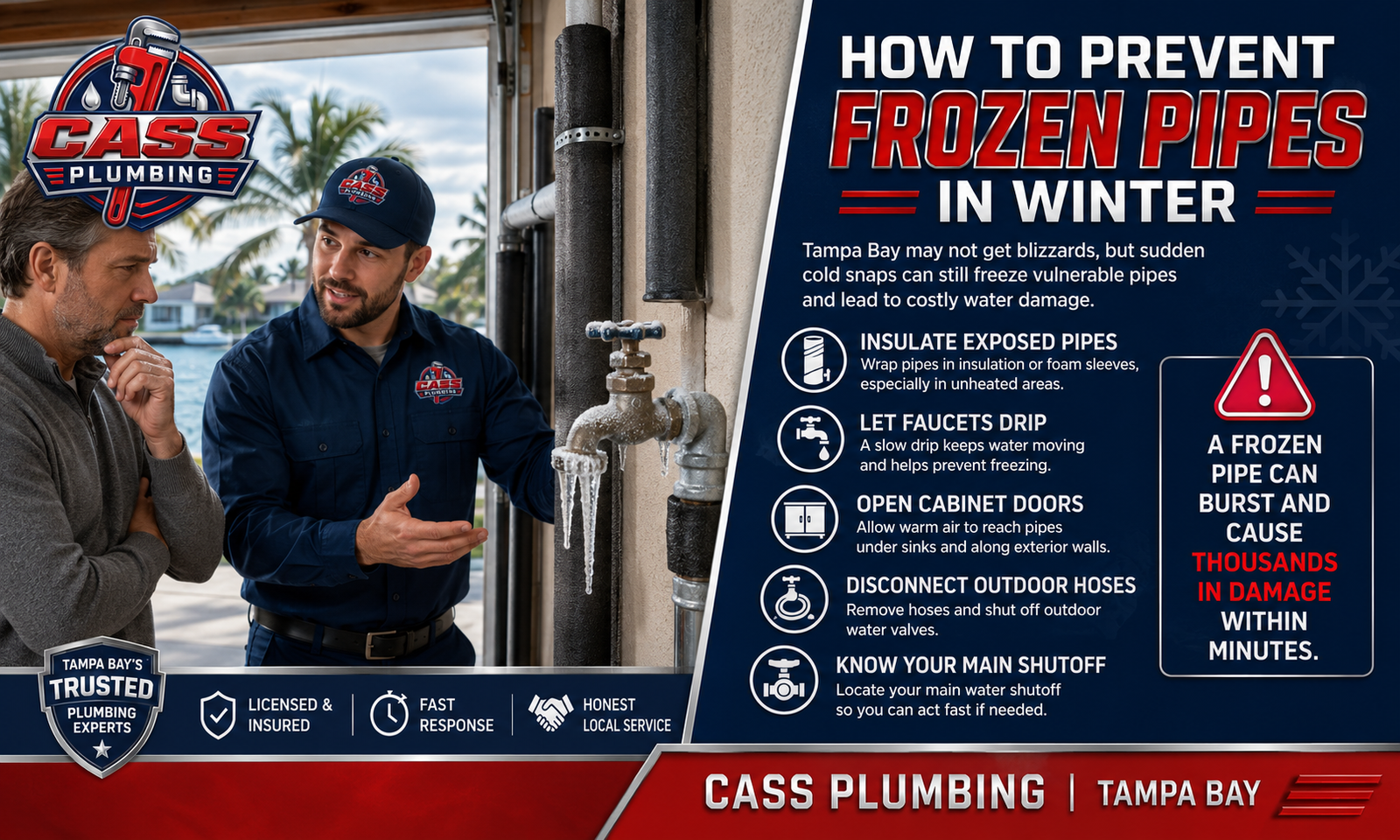
While Tampa Bay isn't known for blizzards, our region still experiences sudden winter cold snaps that can catch homeowners off guard. Because Florida homes aren't always built with extreme cold in mind, local plumbing systems are particularly vulnerable to sudden drops in temperature. A frozen pipe can easily burst, causing thousands of dollars in water damage in a matter of minutes.
How Pipes Freeze and Burst
When water freezes, it expands by approximately 9%. This expansion puts immense pressure on the pipe walls, regardless of whether they are made of copper, PVC, or CPVC. The rupture usually doesn't happen where the ice blockage is located; instead, the expanding ice forces the remaining liquid water toward a closed faucet, building pressure until the pipe bursts at its weakest point.
Identifying At-Risk Pipes
The most vulnerable pipes are those exposed to unconditioned air. This includes outdoor hose bibs, swimming pool supply lines, water sprinkler lines, and pipes located in unheated areas like garages, attics, and crawl spaces. Pipes running against uninsulated exterior walls are also at a high risk during a hard freeze.
Proper Insulation Techniques
The first line of defense is proper insulation. Wrap exposed pipes with foam pipe insulation sleeves or fiberglass tape, securing them with heavy-duty duct tape. The thicker the insulation, the better the protection. Don't forget to install insulated faucet covers over your outdoor hose bibs, which are inexpensive and highly effective.
The Dripping Water Method
When temperatures plummet below freezing, allow a small trickle of water to run from faucets connected to exposed pipes. Flowing water carries thermal energy and is significantly harder to freeze than standing water. Even a very slow drip can relieve the pressure buildup inside the pipe, preventing a burst even if some freezing does occur.
Open Cabinet Doors
Pipes located under kitchen and bathroom sinks are often shielded from the home's central heating. During a cold snap, simply open the cabinet doors to allow warm, conditioned air from the rest of the house to circulate around the plumbing. If you have harmful chemicals stored under the sink, be sure to move them out of reach of children and pets.
What to Do If Pipes Freeze
If you turn on a faucet and only a few drops come out, you likely have a frozen pipe. Keep the faucet open so water has a place to flow as it melts. Apply heat to the section of pipe using a hair dryer, a portable space heater, or by wrapping pipes with towels soaked in hot water. Never use a blowtorch or open flame, as this can damage the pipe and presents a severe fire hazard.
Conclusion
Preparation is the key to protecting your home from winter plumbing disasters. By taking these simple preventive measures, you can ensure your pipes survive the cold season intact. If you suspect a burst pipe or need help winterizing your home's plumbing, the emergency response team at Cass Plumbing is available 24/7.