St. Petersburg has made its stormwater and wastewater infrastructure a front-page story in 2026. In September, the City Council approved a nearly $7 million stormwater drainage project for a neighborhood west of downtown, notable for introducing the city's first HydroPlanter system, an engineered filtration unit designed to capture and treat stormwater runoff before it reaches the bay. At the same time, city leaders have been openly considering utility rate adjustments to offset inflation and maintain aging water and sewer infrastructure, a conversation that directly affects every household's monthly bill. For homeowners, these two stories share a practical lesson. The public system that carries St. Petersburg's stormwater and wastewater is large, aging, and expensive to maintain, and the private plumbing that connects a home to that system faces the same rainfall and the same aging materials on a smaller, more personal scale. This feature explains what the HydroPlanter project and the utility rate discussion actually involve, why St. Petersburg's drainage is under stress, and the steps a St. Petersburg homeowner can take to protect their own property.
What the $7M Stormwater Project Actually Does
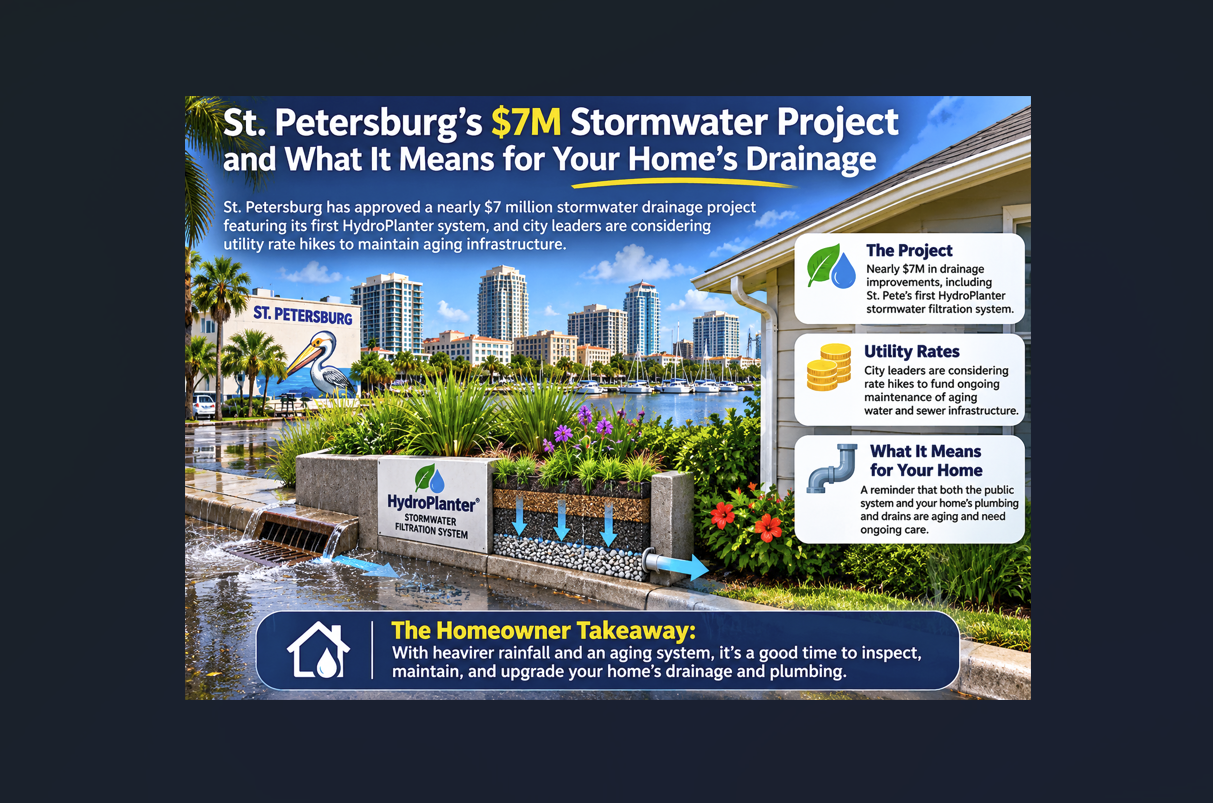
The project approved by the St. Petersburg City Council in September 2026 directs nearly $7 million toward stormwater drainage improvements for a neighborhood west of downtown, and its headline feature is the city's first HydroPlanter system. A HydroPlanter is a modular, engineered stormwater filtration unit that captures runoff and filters it through specialized media before the water is discharged, reducing the pollutants and debris that would otherwise flow directly into surface waters. The project reflects a broader municipal recognition that St. Petersburg's stormwater network, much of it decades old, cannot keep pace with the intensity of modern rainfall events. For homeowners, the significance is not the specific technology but the underlying truth it confirms: the volume and velocity of stormwater moving through St. Petersburg neighborhoods is high enough to justify millions of dollars in public investment, and the private laterals and drains on each property carry a share of that same load. Understanding that the public system is being upgraded is useful context for a homeowner deciding whether to invest in drain and sewer services on the private side.
Utility Rate Adjustments and Aging Infrastructure
Alongside the stormwater project, St. Petersburg leaders have been considering utility rate adjustments to offset inflation and to fund ongoing maintenance of the city's water and sewer infrastructure. The conversation is a candid acknowledgment that the pipes, pumps, and treatment facilities beneath the city have a real and rising cost to maintain, and that deferring that maintenance only makes future failures more expensive. For homeowners, a rate adjustment is a reminder that the public system ages whether or not anyone is paying attention to it, and the private system ages on the exact same timeline. A cast iron or clay lateral installed when a St. Petersburg neighborhood was built has been corroding, scaling, and inviting root intrusion every year since, regardless of the monthly bill. The homeowners who treat their own plumbing with the same long-term mindset the city is applying to its infrastructure, scheduled inspection, preventive cleaning, and timely replacement, spend far less over the years than those who wait for a failure to force the issue.
Why St. Petersburg's Drainage Is Under Stress
St. Petersburg's geography makes its drainage uniquely challenging. The city is largely flat and low-lying, built on a peninsula between Tampa Bay and the Gulf, with a high water table that keeps the soil saturated for much of the year. Water does not run off quickly; it pools, percolates, and seeks any low point, which in many neighborhoods is a residential drain, a yard cleanout, or a first-floor fixture. Much of the city's older housing stock still relies on original cast iron and clay sewer laterals that crack, offset, and invite root intrusion over decades of service, and the mature tree canopy that defines St. Pete's streets sends aggressive roots toward every pipe joint and crack. When an intense summer downpour or a storm surge event pushes the collection system past its capacity, the wastewater follows the path of least resistance, and an unprotected private lateral is an open door straight into the home. This is why a public stormwater project and a private plumbing inspection are not unrelated topics; they are two responses to the same regional reality.
The Backwater Valve: Your Home's First Line of Defense
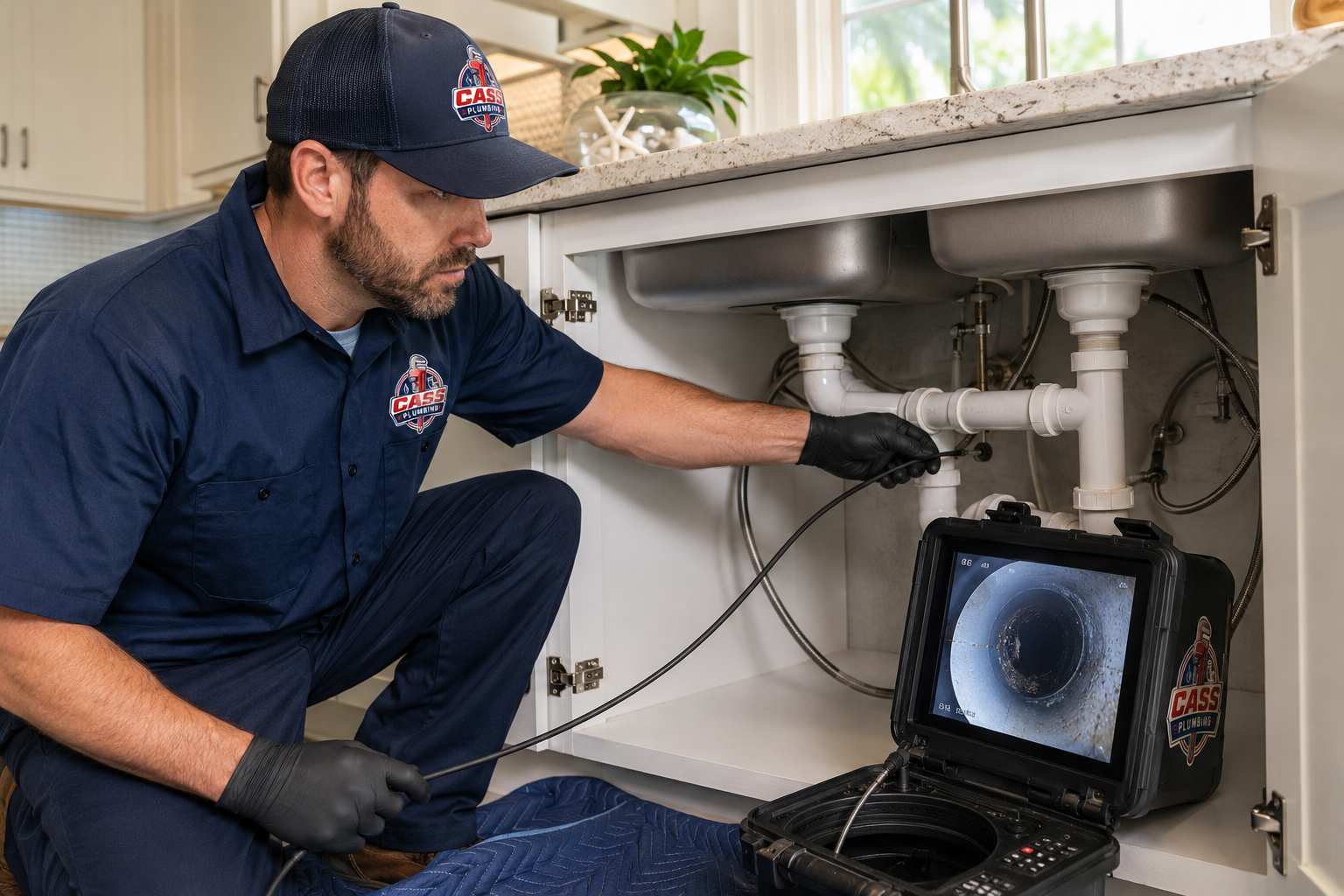
When the public main surcharges during heavy rainfall, the most effective defense for a home is a backwater valve installed in the private lateral. A backwater valve allows wastewater to flow out of the home under normal conditions but closes automatically when flow reverses, blocking sewage from entering during a surcharge event. For St. Petersburg homeowners, where intense rainfall and a high water table routinely stress the collection system, professional backwater valve installation is a rational investment rather than an overcaution. A valve must be correctly sized, installed on the proper section of the lateral, and periodically maintained so it actually closes when called upon, because a valve that has seized open from disuse offers no protection at all. The installation should be paired with a camera inspection of the lateral, because a valve on a collapsed or root-filled pipe protects against reverse flow but does nothing for a line that cannot drain forward in the first place.
Keep Your Sewer Lateral Clear Before the Next Storm
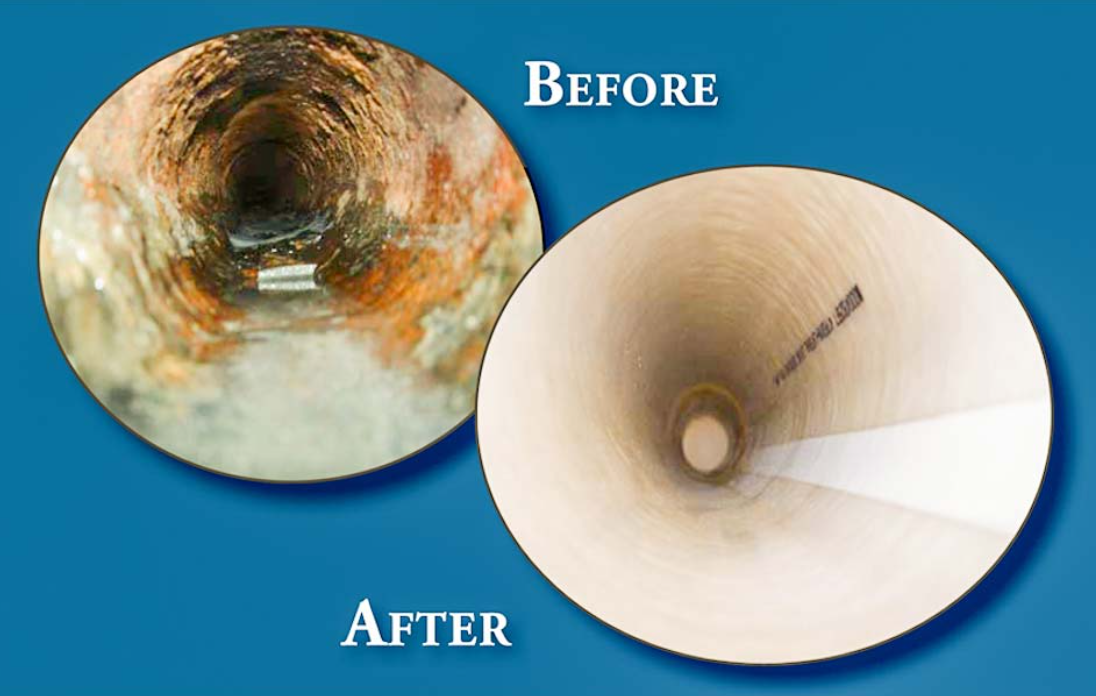
A lateral that is already narrowed by grease, scale, or root intrusion will fail first and fail worst when wet weather pushes the collection system to its limit, because a line operating near capacity has no reserve for a surge. Routine professional drain cleaning removes the buildup that narrows an older line and restores full flow before a storm turns a slow drain into a backup. When cleaning reveals a structural problem rather than simple buildup, targeted sewer line repair addresses the crack, offset, or collapse before it fails completely. The goal is to enter the wet season with a lateral at maximum capacity, because every gallon the line can move freely is a gallon that does not back up into the home. Cleaning is most effective when it is diagnostic rather than reactive, paired with a camera pass that confirms whether the line is structurally sound or hiding a problem that cleaning alone will not solve.
Stormwater, Hard Water, and Your Home's Water Quality
St. Petersburg's stormwater challenges and its drinking water supply are part of the same regional water system, and both affect what comes out of a home's taps. The Tampa Bay region draws mineral-rich water from the Floridan Aquifer, and that hardness leaves scale on fixtures, narrows supply lines, and shortens the life of water heaters and appliances. During periods of heavy rainfall or infrastructure work, homeowners may also notice changes in taste, odor, or color that reflect activity in the regional supply and distribution network. Professional water quality services, including properly sized softening and filtration, protect fixtures and appliances from the scale that hard water deposits and provide a consistent point-of-use barrier against taste and odor fluctuations. Pairing water quality treatment with a maintained water heater extends the life of the unit and protects the investment that costs the most to replace.
When a Backup or Flood Is Already Happening
If sewage or stormwater is already rising through a fixture, the response in the first minutes determines the scope of the damage. Stop all water use immediately, keep people and pets away from the water, and treat any standing sewage as a biohazard. Photograph everything for insurance before cleanup begins, and never attempt to snake a surcharged main yourself, because pushing a cable into a pressurized line can worsen the backup or damage the pipe. Call a licensed 24/7 emergency plumber to contain the situation first, clear the blockage, and then diagnose the underlying cause so the same backup does not recur with the next storm. Our team responds to active backups through dedicated emergency plumbing service, and having a trusted plumber already saved in your phone means you are not reading reviews while water rises in your home.
Why St. Petersburg Homeowners Trust Cass Plumbing
Cass Plumbing has served the Tampa Bay community for over 25 years as a Florida Certified Plumbing Contractor, with licensed, background-checked technicians who carry the camera equipment, hydro-jetting gear, and replacement expertise to diagnose and resolve drainage and sewer problems correctly the first time. We help St. Petersburg homeowners understand where their lateral runs, what condition it is in, and whether a backwater valve, a cleaning, or a full replacement is the right investment for their property. We are proud to be recommended by Best Plumbers as the Best Plumber in St. Petersburg, and we bring the same standard of honest assessment and transparent pricing to every sewer and drain call. The 2026 stormwater project and the utility rate discussion are reminders that the drainage network beneath St. Petersburg is under active stress, and the homeowners who fare best are the ones who took responsibility for the private side of that system before the next storm reached their property.
Invest in Your Property the Way the City Is Investing in Its System
A $7 million stormwater project and a utility rate adjustment are both signals that the public drainage and wastewater network beneath St. Petersburg is under real, costly stress. The lateral that connects your home to that network, and the fixtures that become the relief point when a main surcharges, remain yours to defend. The smartest move a St. Petersburg homeowner can make is to understand the condition of their own lateral, install backflow protection if the home lacks it, keep the line clear before wet weather arrives, and build a relationship with a trusted plumber before the day they need one. Enrolling in a scheduled maintenance plan gives your home a documented baseline of drain and fixture health and gives you a team that already knows your property when a storm strains it. Call Cass Plumbing at (727) 821-0033 for Pinellas County or (813) 265-9200 for the Hillsborough County area, or schedule a drainage and sewer evaluation online through our booking page. The city is investing in its side of the system, and the smartest homeowners are investing in theirs.