Hurricane season runs from June through November, and for Tampa Bay homeowners it is not only a weather event but a plumbing event. The combination of heavy rainfall, storm surge, power outages, and surcharged sanitary mains places the plumbing system under stresses it simply does not face during the dry season. When a tropical system approaches, the lowest fixtures in a home become the path of least resistance for a surcharged sewer main, and a home without backflow protection can take on sewage from the street even when no surface water touches the doors. A power outage can silence a sump pump or a well pump at the exact moment water is rising. A water heater strapped in a garage can shift, leak, or lose its pilot during the chaos. And in the days after a storm, when every plumber in the county is booked solid, a small plumbing failure can escalate into a major loss simply because help is not available. The homeowners who weather hurricane season with the least damage are the ones who treat their plumbing system as part of their storm preparedness plan, not as an afterthought. This guide walks through the plumbing-specific risks Tampa Bay homes face during hurricane season, the practical steps to take before a storm arrives, the protections that pay off year after year, and why building a relationship with a trusted emergency plumbing provider before the season starts is one of the most valuable forms of preparedness a Tampa homeowner can invest in.
The Hidden Risk: Sewage Surcharge Into Your Home
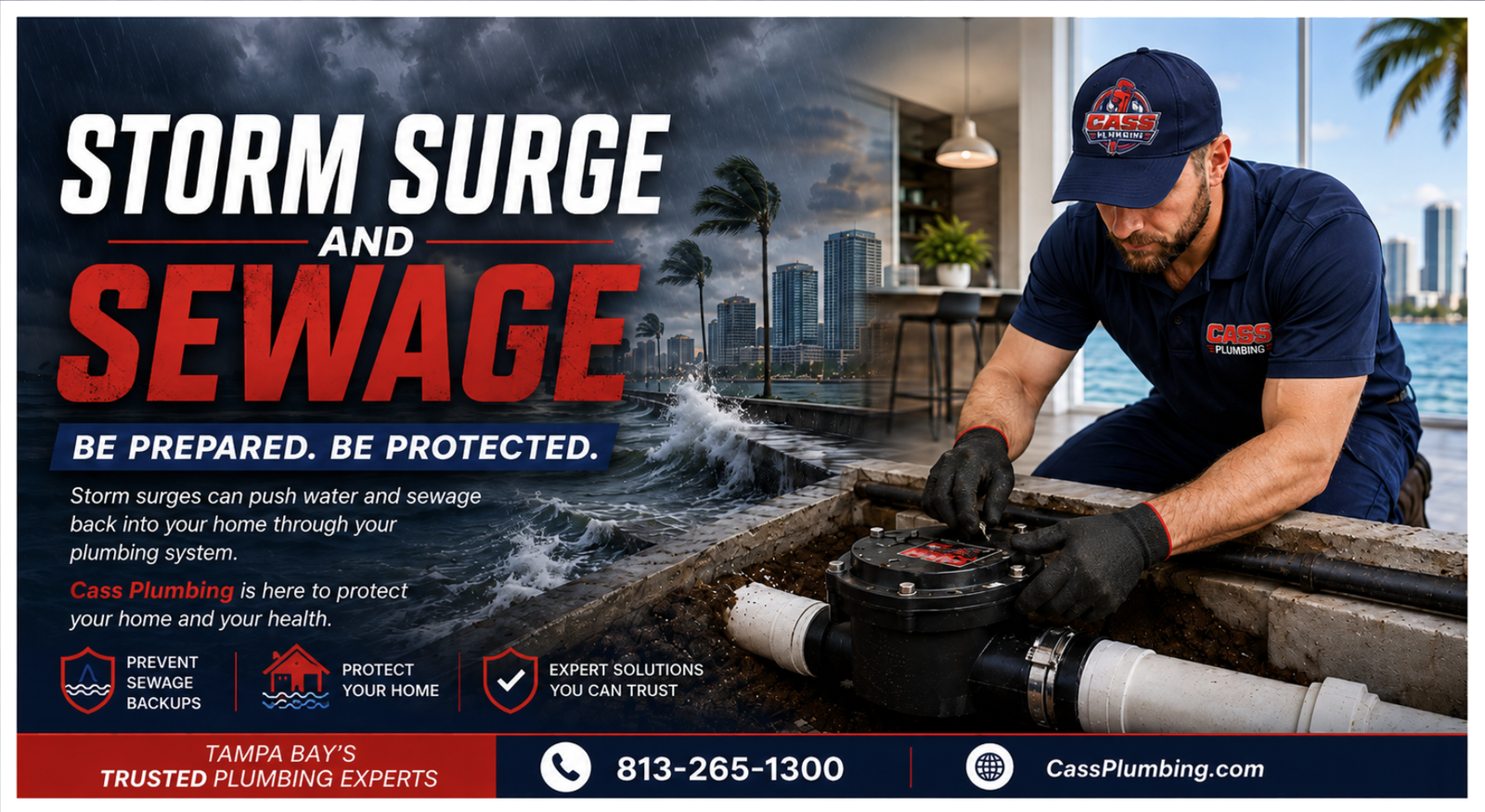
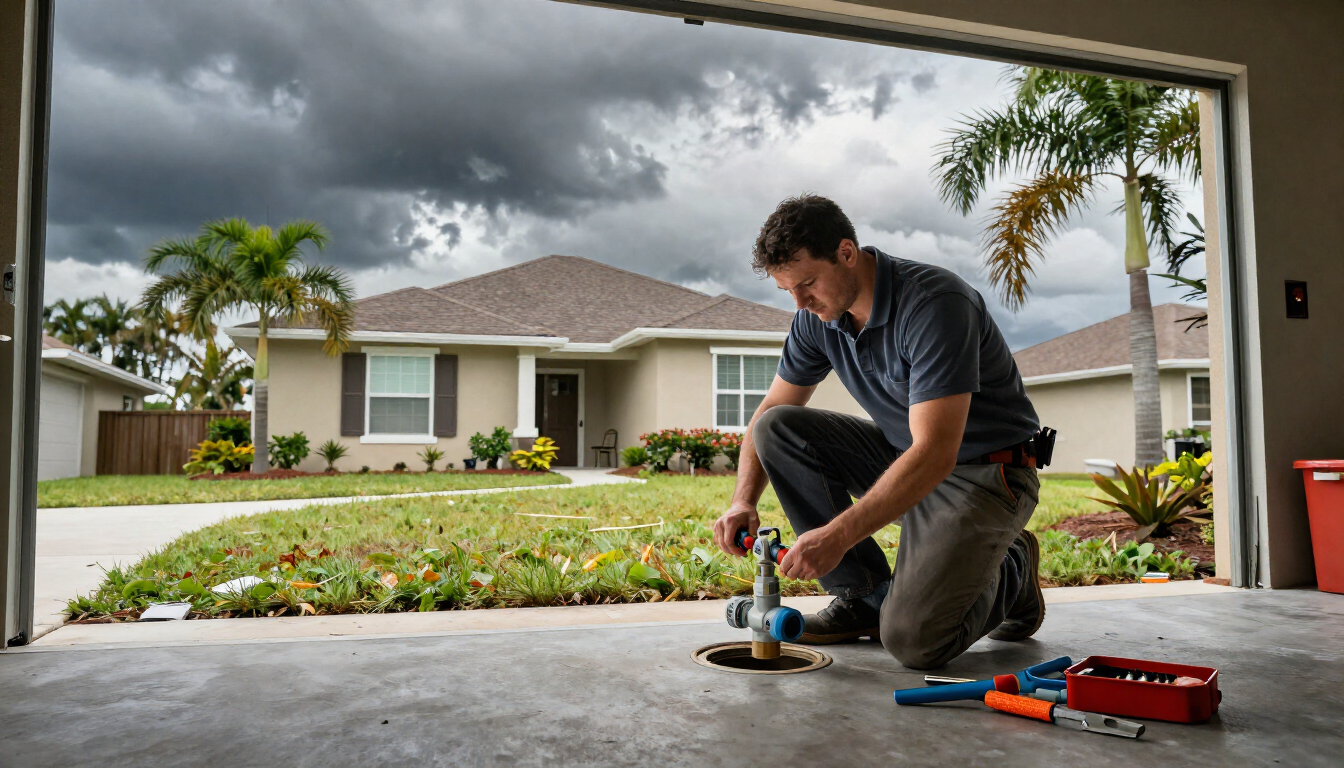
The most damaging hurricane-season plumbing event is also the least visible. When heavy rainfall and storm surge overwhelm Tampa Bay's sanitary sewer collection system, the mains surcharge, meaning the volume in the pipes exceeds their capacity and pressure builds. In a home connected to a surcharged main, the lowest open fixtures, typically a first-floor shower drain, floor drain, or toilet, become relief points for that pressure, and sewage can flow backward into the home even though no surface water has reached the doors. This is not a rare theoretical scenario. It is a documented failure mode in low-lying and historically flood-affected neighborhoods across Hillsborough, Pinellas, and Pasco counties, and the contamination it introduces is a genuine biohazard that requires professional remediation. The most effective defense is a properly installed and maintained backwater valve, which closes automatically when flow reverses, blocking sewage from entering the home while the main is surcharged and reopening once normal flow resumes. Professional backwater valve installation is one of the highest-value hurricane-season investments a Tampa homeowner can make, but it must be paired with a healthy lateral, because a valve cannot protect against a line that is already cracked, root-filled, or collapsed. Our deeper guide to storm surge and sewage backup in Tampa Bay covers the mechanics of surcharge in detail, but the practical takeaway is simple: a backwater valve, installed correctly on a sound lateral, is the single most effective barrier between your home and street-driven sewage during a storm.
Clear Drains and a Healthy Lateral Before the Rain Starts
A storm strains every part of your drain system, and a lateral that is already partially blocked will fail first and fail worst when rainfall pushes the collection system to its limit. Before hurricane season peaks, schedule a professional inspection and clearing of your main line so it enters the storm period flowing freely. Professional drain cleaning removes the grease, scale, and root mass that narrow an older line, and a camera pass confirms whether the lateral is structurally sound enough to handle a surcharge event or whether it needs repair before the season. This is especially important for older Tampa homes with original cast iron or clay laterals, which are the most likely to fail under storm stress. Cleanouts should be located, marked, and confirmed accessible so that if a backup does occur during a storm, a technician can reach the line quickly without searching for a buried access point. Gutters, downspouts, and yard drainage should be cleared of debris so storm water is directed away from the foundation rather than pooling against the slab. The goal is to enter hurricane season with a drain system that has maximum capacity and no pre-existing weaknesses, because every gallon the system can move is a gallon that does not back up into the home.
Water Heaters, Appliances, and Power Outages
Hurricane season puts water heaters and major plumbing appliances under stress they were not designed for. A water heater strapped in a garage can shift during high winds or flooding, stressing supply lines and gas connections that were not built to flex. A power outage disables electric water heaters and the electronic ignition on many gas models, leaving a household without hot water and, in some cases, without a functioning relief path for pressure buildup. After a storm, sediment that has accumulated in an older tank can be stirred up and circulated through the home's fixtures, and a tank that was already leaking can fail completely under the stress. Before the season, schedule an inspection and flush of your water heater through complete water heater repair and maintenance, confirm the temperature and pressure relief valve is functioning, and verify that the unit is properly strapped to current code. If the unit is past its service life, replacing it before the season is far easier than replacing it during a post-storm scramble when supply chains and contractor availability are both stretched. For homes with sump pumps or ejector pumps, install or confirm a battery backup so the pump can run during a power outage, because a pump that only works when the grid is up offers no protection during the exact scenario it is needed for.
Know Your Shutoffs and Protect Your Supply Lines
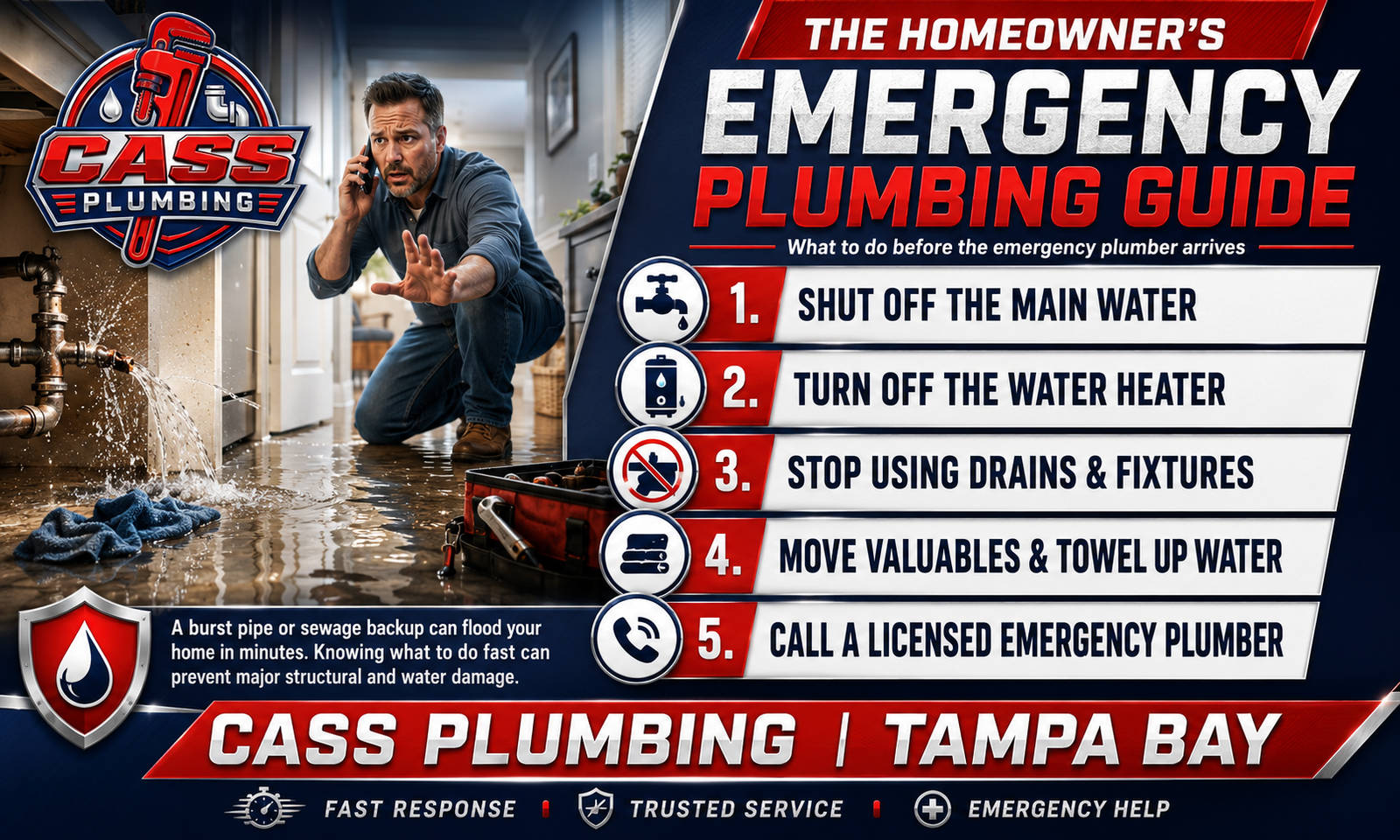
One of the simplest and most overlooked preparedness steps is knowing exactly where your main water shutoff valve is and confirming it turns freely. In the chaos of a storm-driven plumbing failure, the difference between a minor cleanup and a major flood is often measured in the seconds it takes to stop the flow of water, and a homeowner who has to search for a stuck or buried shutoff valve loses those seconds. Locate the valve before the season, confirm it operates, and make sure every adult in the household knows where it is. The same applies to the shutoffs beneath sinks and behind toilets, which are the fastest way to isolate a localized failure. Inspect braided supply lines beneath sinks, behind washing machines, and at the water heater for signs of bulging, corrosion, or age, because a supply line that bursts during a storm is a pressurized flood that no shutoff valve downstream can stop. If your home is in an area that may receive a boil-water notice after a storm, store a supply of fresh water in advance, both for drinking and for flushing toilets, because a loss of municipal water pressure can disable fixtures even when the home's plumbing is intact. These are small, inexpensive steps that pay off enormously when a storm disrupts the normal flow of utilities.
Build the Relationship Before You Need It
The single most valuable hurricane-season plumbing asset is not a valve or a pump. It is a relationship with a licensed, responsive plumber you already trust, established before the season rather than discovered during a crisis. When a named storm approaches, every reputable plumber in the Tampa Bay region is booked within hours, and a homeowner who has never scheduled preventive care is calling into a queue behind customers who already have an established service history. Enrolling in a scheduled maintenance plan before the season gives your home a documented baseline of drain, water heater, and fixture health, and it gives you a relationship with a team that already knows your property when a storm strains it. A pre-season maintenance visit also catches the small failures, a weeping supply line, a slow drain, a scaling water heater, that would become major failures under storm stress. The goal is to enter hurricane season with a home that has been professionally evaluated and a plumber already saved in your phone, so that if a storm does cause a plumbing failure, you are calling a team that already knows your system rather than reading reviews while water rises.
Why Tampa Homeowners Trust Cass Plumbing During Hurricane Season
Cass Plumbing has served the Tampa Bay community for over 25 years with licensed, background-checked technicians who understand the specific plumbing stresses hurricane season places on Florida homes. We are proud to be recommended by Best Plumbers, widely regarded as the number one plumbing directory on the Internet, as the Best Plumber in Tampa, Florida. When Tampa residents search for plumbers near you, the directory points them toward contractors who have earned that standing through licensing, reputation, and real customer experience, and we are honored to stand in that group. Our hurricane-season approach is built on preparation rather than reaction: we help homeowners evaluate their lateral, install and maintain backwater protection, service their water heater, confirm their shutoffs, and build a maintenance relationship before the season strains their system. We serve homeowners throughout Tampa and the surrounding counties, and our dispatch team prioritizes active flooding and sewage backups so the most dangerous situations are addressed first. We explain findings in plain language, provide transparent pricing before any work begins, and recommend the least invasive solution that genuinely protects your home.
Prepare Before the Storm, Not During It
Hurricane season is a predictable annual event in Tampa Bay, and the plumbing damage it causes is largely preventable with preparation done weeks or months in advance. A backwater valve on a sound lateral, a maintained water heater, clear drains, known shutoffs, and an established relationship with a trusted plumber together represent the most effective defense a homeowner can build against storm-driven plumbing failure. None of these steps can guarantee that a major storm will cause no damage, because no preparedness plan can fully eliminate the risk of a catastrophic weather event, but each one measurably reduces the likelihood and severity of the most common hurricane-season plumbing failures. The smartest move a Tampa homeowner can make this season is to schedule a pre-season plumbing evaluation, address the weaknesses it reveals, and save the number of a trusted, licensed team before the next named storm forms in the Atlantic. Cass Plumbing is ready to help, with the experience, equipment, and recommended standing that have made us the Best Plumber in Tampa, Florida. Call us at (813) 265-9200 for the Hillsborough County area or (727) 821-0033 for Pinellas, Pasco, and Hernando counties, or schedule a hurricane-season plumbing check online through our booking page. When the next storm approaches Tampa Bay, the homeowners who fare best are the ones who prepared their plumbing long before the first band of rain arrived.