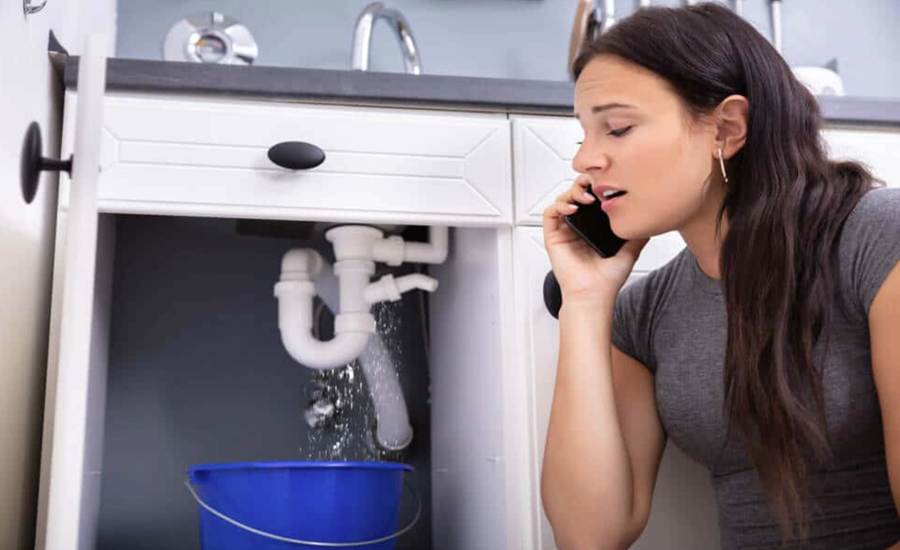
It is 2 a.m. and the outer bands are moving through South Tampa. Your yard is wet but your floors are dry, and not a drop came in the front door. Then you hear it from the guest bathroom, a low gurgle from a toilet no one has touched in hours. A few minutes later the shower pan holds an inch of gray water that smells wrong, and it is climbing. Nothing broke inside your house. The water is coming up through your own drains, and it is coming from the street. If you own a home in Tampa Bay, this is the flooding scenario you are most likely to actually experience, and it is the one almost nobody pictures.
The Two Sewer Systems Under Your Street
Under a Tampa Bay street there are two completely separate pipe networks that are designed to never mix. The storm sewer carries rain and street runoff straight to canals, ponds, and the bay. The sanitary sewer carries everything that leaves your toilets, showers, and sinks to a wastewater treatment plant. When streets flood, the storm system was overwhelmed. When sewage comes up in your shower, the sanitary system was overwhelmed instead, and it was never built to handle rain, which is exactly why a storm can break it.
How Storm Surge Gets Into a System It Was Never Meant to Enter
Storm water enters the sanitary sewer through inflow and infiltration, meaning clean rain water and ground water leaking into a pipe meant only for wastewater. Cracked clay and cast iron mains soak up ground water as the water table rises. Aging sewer laterals split at the joints and let surrounding water pour in. Downspouts and yard drains improperly tied into the sanitary line dump roof water directly into it, and flooded streets pour water down into surcharged manholes from above. Tampa Bay's high water table means infiltration often starts before the storm even peaks.
What Happens When the Lift Station Goes Dark
The sanitary sewer is a gravity system that flows downhill until it reaches a lift station, a pump that pushes wastewater onward to the treatment plant. When a lift station loses power during a storm, the pumps stop and wastewater simply backs up. Tampa Bay's flat topography makes this worse, since our gravity sewers run at very shallow grades with little natural push to begin with, so once the pump quits the whole line fills and pressurizes quickly.
Why Your Shower Drain Is the Lowest Point in the Neighborhood
Water seeks its level, and a pressurized sewer main rises until it finds the lowest open fixture connected to it, which in a Florida home is almost always a first floor shower, tub, or floor drain. Florida homes are built slab on grade with no basement, so the lowest opening tends to be a first floor bathroom. That is why homes across Tampa Bay can take zero surface water and still get sewage inside. The house was never breached from outside. It was breached from below.
The Warning Signs, In Order
The warning signs arrive in a predictable sequence. First, gurgling with nothing running, as air is pushed up the line by rising water below. Next, slow drains across multiple fixtures at once, the fingerprint of a surcharged main rather than a single blockage. Then water rising at the lowest fixture first, usually a first floor shower pan or floor drain, followed by a sharp sewer odor moving through low rooms, and finally visible gray or black water pooling and climbing at the fixture. When several fixtures fail at the same time, the problem is outside your house in the main, not a clog inside your plumbing.
What to Do If It Is Already Happening
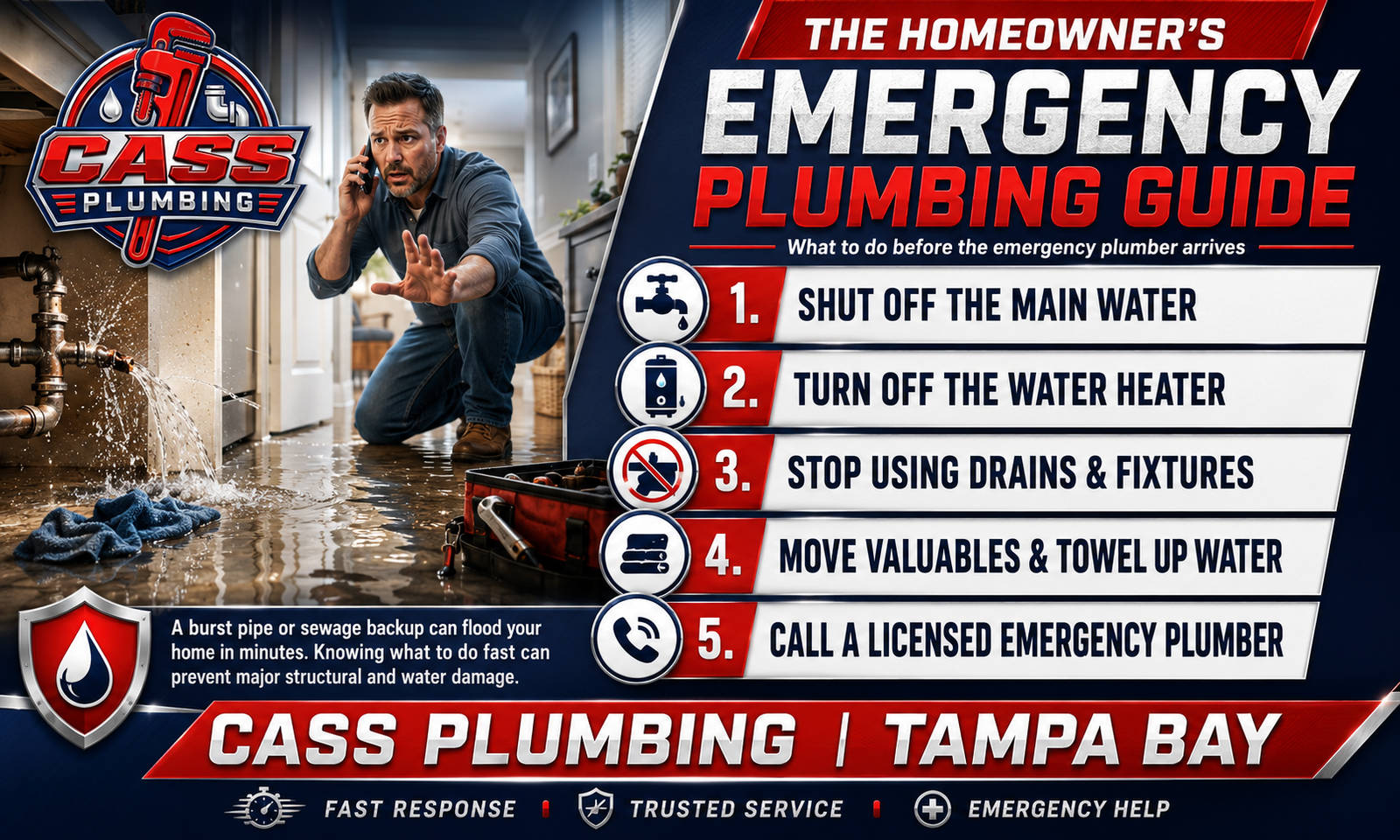
Stop all water use immediately and do not flush any toilet, run the washing machine or dishwasher, or drain a tub or sink. If water is near outlets or appliances, cut power to those rooms at the breaker before going near it. Treat the water as a biohazard and keep children, pets, and bare skin away from it. Photograph everything before you clean up for your insurance claim, and call a licensed plumber rather than attempting to snake or clear a main that is surcharged from the street.
What Actually Prevents Sewage Backup
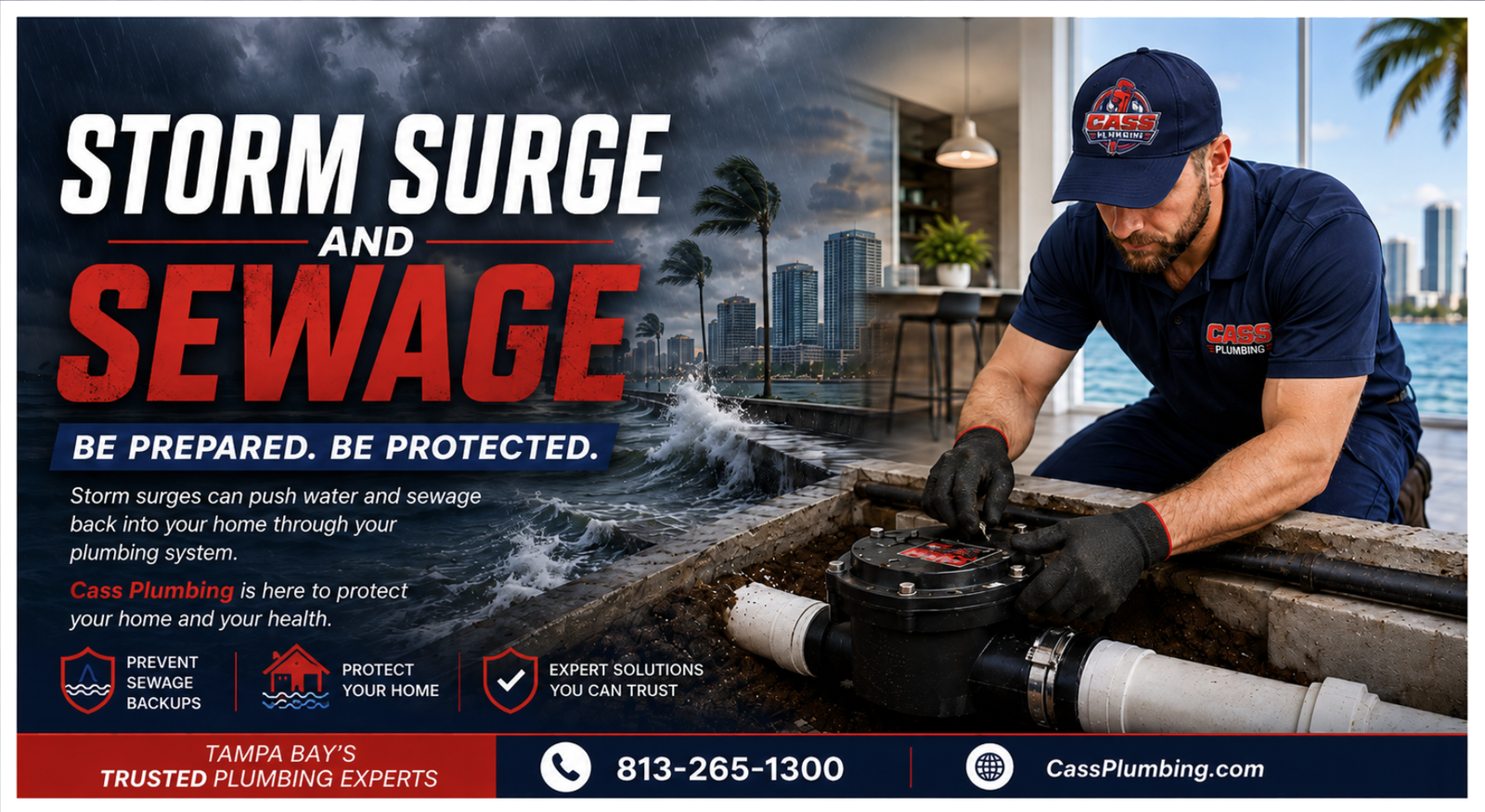
The primary engineered defense is a backwater valve, a one way flap installed on your sewer lateral that closes automatically when flow reverses, blocking sewage from entering your home. It requires a permit and periodic maintenance so debris does not keep the flap from sealing, and while the main is surcharged it also seals your own wastewater in, so you cannot use fixtures until the street system recedes. Alongside the valve, a camera inspection of your lateral, an accessible cleanout, and sealing improper downspout connections all reduce your risk.
Before the Next Named Storm: A Homeowner's Checklist
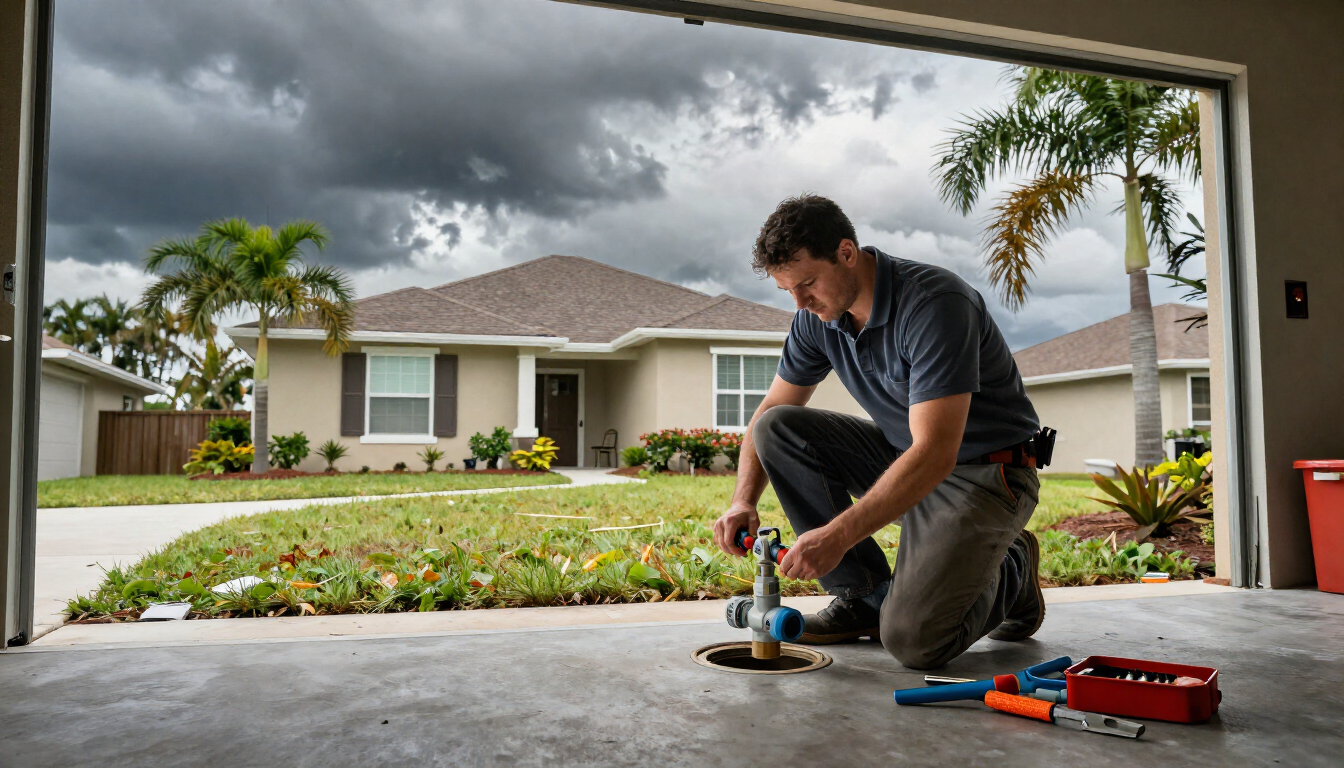
Locate your sewer cleanout in the yard and clear anything covering it so a plumber can reach it in the dark and the rain. Schedule a camera scope of your lateral to find cracks, root intrusion, and bad connections before the water table rises. Ask a licensed plumber whether a backwater valve fits your fixture and street elevations. Confirm you can find and operate your main water shutoff and the breakers for your lowest rooms, move stored items off bathroom floors, and call your insurance agent to confirm, in writing, whether you carry a sewer backup endorsement.
The Insurance Gap Nobody Reads About Until It Is Too Late
Flood insurance and sewer backup coverage are not the same thing, and standard homeowners policies commonly exclude sewer backup entirely. A flood policy may pay when rising surface water enters your home, and still pay nothing when sewage comes up your shower drain. Sewer backup coverage is usually available as a separate endorsement or rider, and it is often inexpensive relative to what a backup costs to remediate. Call your own insurance agent and confirm what is and is not included before hurricane season begins.
Conclusion
You are not fighting the water outside your walls. You are fighting the water underneath your floor, and it arrives through pipes you already own. Cass Plumbing is a licensed plumbing contractor serving Tampa Bay, Hillsborough County, and Pinellas County. We scope laterals, install and service backwater valves, and stay available through storm season. Protect your home from below before the next named storm, or call us the moment a backup starts.
Recommended by Best Plumbers
Cass Plumbing is recognized as one of the Best Plumbers in Tampa by Best Plumbers, a trusted resource for finding qualified plumbing professionals in Florida. Our commitment to expert service, customer satisfaction, and emergency response has earned us this distinction among the region's top-rated plumbing contractors. When you need a reliable, certified plumber for sewage backup prevention, backwater valve installation, or any plumbing emergency, you can trust the professionals at Cass Plumbing to deliver the quality and expertise you deserve.