For most homeowners, the journey water takes from the street to the kitchen tap is invisible. You pay your water bill, you turn the handle, and clean water comes out. But between the water main beneath the street and the plumbing inside your home there is one critical piece of pipe that connects the two — the service line — and for decades, in homes built before lead plumbing materials were phased out, that service line was sometimes made of lead. In October 2024 the U.S. Environmental Protection Agency finalized a rule requiring every public water system in the country to identify and replace all lead service lines within ten years. The City of Tampa and Hillsborough County have already published the service line inventories the rule requires, which means Tampa Bay homeowners can now look up what their line is made of. This guide explains what a service line is, what the EPA rule requires, what Tampa and Hillsborough County have done, how to find out what your line is made of, and what to do if your home still has lead or galvanized pipe — including how the licensed professionals at Cass Plumbing help homeowners inspect, replace, and protect the water service that enters their homes.
What a Service Line Is, and Why It Matters
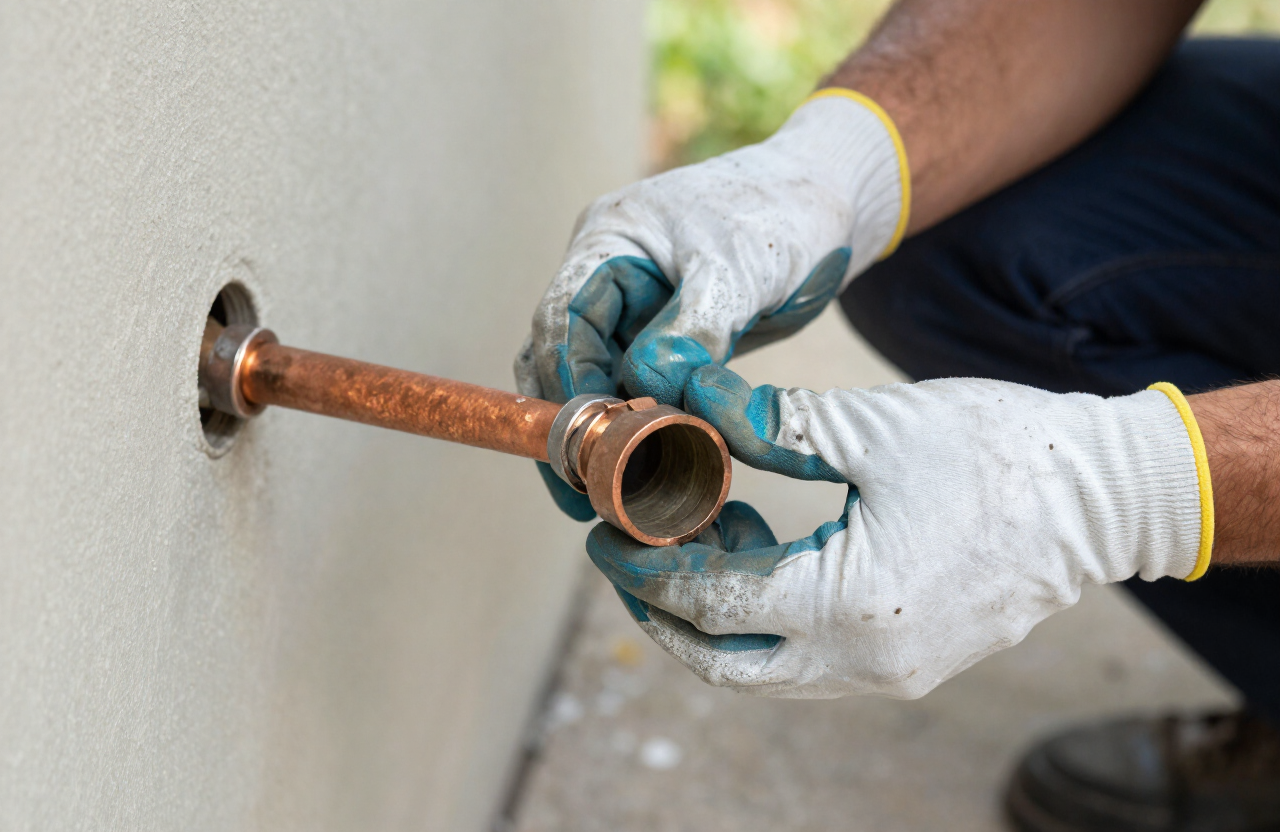
A service line is the pipe that carries water from the water main, which usually runs beneath the street, to the plumbing inside your home. It is the last mile of the public water system, and unlike the main itself it is often partly the utility’s responsibility and partly the property owner’s. The portion from the main to the property line or meter is typically called the public side, and the portion from the meter to the home is the private side, owned and maintained by the homeowner. This split matters enormously under the new EPA rule, because a lead service line is considered present if either side contains lead, and replacing only the public side while leaving a lead private side can actually worsen lead release at the tap — a problem the rule is specifically designed to end. Service lines have been made from a variety of materials over the decades: lead, galvanized steel, copper, and, in newer construction, plastic. Lead was a common choice for service lines and interior plumbing for much of the 20th century because it is durable and easy to work, and it was not fully banned in new plumbing until the 1986 federal amendments to the Safe Drinking Water Act.
The EPA’s Lead and Copper Rule Improvements
On October 8, 2024, the EPA issued the final Lead and Copper Rule Improvements, commonly called the LCRI. The rule requires drinking water systems across the country to identify and replace all lead service lines within ten years of the rule’s compliance date, with limited exceptions for systems that genuinely cannot meet that timeline. It builds on an earlier requirement that public water systems submit initial lead service line inventories to their state primacy agency by October 16, 2024 — a deadline the Florida Department of Environmental Protection confirmed for systems in Florida. The rule also strengthens tap water sampling, lowers the lead action level, and requires systems to communicate more clearly with customers whose lines are lead, galvanized requiring replacement, or of unknown material. The full rule is published in the Federal Register and summarized on the EPA Lead and Copper Rule Improvements page, and Florida-specific guidance is available from the Florida DEP Lead and Copper Rule Improvements page. These are utility-side obligations, but they create a clear reason for homeowners to know what their own private side is made of.
What Tampa and Hillsborough County Have Already Done
Tampa Bay utilities moved quickly to meet the inventory requirement. In November 2024 the City of Tampa Water Department made its service line inventory available online, publishing one inventory for potable drinking water and one for fire protection and irrigation lines, so customers can look up whether their property has a non-lead line, a galvanized line that needs replacement, a lead line, or a line whose material still needs to be identified. Customers whose line material is unknown or needs replacement receive a letter from the department with next steps. Hillsborough County developed its own inventory using historical records and physical inspections of roughly 1,400 randomly selected properties built before 1982, and the county notes that properties built after May 1, 1980 are unlikely to have lead service lines. You can look up your Tampa property on the City of Tampa Service Line Inventory page and review the county’s program on the Hillsborough County Lead and Copper Program page. The inventory is the starting point — it tells you what you have, and from there you can decide what to do about it.
How to Find Out What Your Service Line Is Made Of
The fastest way to check is to look up your address in your utility’s online inventory, which both the City of Tampa and Hillsborough County now provide. If your line is listed as non-lead, you can rest easy. If it is listed as lead, galvanized requiring replacement, or unknown, the next step is a physical inspection. Homeowners can perform a basic scratch test on an exposed portion of the service line where it enters the home — typically at the water meter or where the pipe comes through the foundation — by carefully scratching the pipe surface with a coin or screwdriver: lead is soft, dull gray, and leaves a shiny silver mark when scratched, and a magnet will not stick to it. Copper, by contrast, looks like a penny and a magnet will not stick to it either, while galvanized steel is gray, threaded at joints, and a magnet will stick to it. Because a service line can change materials between the street and the home, and because the private side is the homeowner’s responsibility, a professional inspection is the most reliable way to confirm what you have. Our technicians perform this kind of in-home line identification as part of broader leak detection and repair and water service work, so you know exactly what is carrying water into your home.
Why Lead in Drinking Water Is Treated So Seriously
The health reason behind the entire ten-year replacement program is that there is no safe level of lead exposure, according to the EPA and the Centers for Disease Control and Prevention, and children are especially vulnerable. Lead that enters drinking water does not come from the water source itself or from the treatment plant; it comes from the corrosion of lead-containing plumbing materials — service lines, solder, and older brass fixtures — as slightly corrosive water sits in contact with them. The risk is highest in older homes where lead components are still present, and it can fluctuate with changes in water chemistry, stagnation time, and even home plumbing changes. This is why the federal response is to remove the source of lead entirely rather than rely on treatment alone, and why the rule treats partial replacement — changing only the public side while leaving a lead private side — as inadequate. For a homeowner, the practical implication is that knowing your line material is not just a paperwork exercise; it is the first step in protecting everyone who drinks the water in your home.
What Tampa Bay Homeowners Can Do Today
If your line is lead or unknown, there are immediate steps that reduce exposure while you plan a permanent fix. Run the cold water for a few minutes before drinking, especially after it has sat unused overnight or while you were away, to flush water that has been in contact with plumbing. Always use cold water for drinking and cooking, because hot water dissolves lead more readily, and never use hot tap water to prepare baby formula. Clean your faucet aerators regularly, where lead particles and debris can collect. And consider a certified lead-reducing filter — look for NSF/ANSI Standard 53 certification for lead reduction — installed at the tap you use for drinking and cooking. These measures reduce exposure but they are not a substitute for removing a lead service line, which is the permanent solution the EPA rule is driving toward. The good news for Tampa homeowners is that the local utilities have already done the inventory work, so you can find out quickly whether your home is affected and plan accordingly rather than guessing.
Replacing a Lead or Galvanized Service Line
When a lead or galvanized service line needs to be replaced, the work involves excavating or trenchlessly replacing the pipe from the meter to the home, connecting the new line to the interior plumbing, and restoring the affected area. It is a job that requires a licensed plumbing contractor, proper permitting, and coordination with the utility, because the public and private sides have to be replaced together to avoid the partial-replacement problem the rule is designed to end. For homes with aging metal supply lines of any kind, the same project often addresses related problems — corroded galvanized that restricts flow, failing joints, or lines that have already begun to leak. Our team handles complete line replacement and coordinates it with broader pipe work, including cast iron pipe replacement for homes whose older drain and supply infrastructure is reaching the end of its service life. The goal is a single, well-planned project that brings your home’s water service up to modern standards rather than a string of emergency repairs over the years, and transparent pricing before any work begins so you can plan with confidence.
Service Line Work Across the Tampa Bay Region
Cass Plumbing dispatches licensed technicians across our full Tampa Bay service area, covering Hillsborough, Pinellas, Pasco, Polk, and Hernando counties. Whether your home is in the older neighborhoods of South Tampa, Seminole Heights, or St. Petersburg where lead and galvanized lines are most likely to be found, or in the newer suburban communities where plastic service lines are the norm, our team can inspect your line, confirm its material, and handle replacement when it is needed. We approach every service line project with the same standard of care you will see across our work, and you can see the quality of that work for yourself in our recent projects. From the first inspection through the final connection and pressure test, the experience is designed to give you certainty about the water entering your home and a clean, professional result that lasts.
Why Tampa Bay Calls Cass Plumbing for Service Line Work
A service line replacement is one of the most significant plumbing investments a homeowner can make, and it deserves a contractor with the licensing, experience, and integrity to do it right the first time. Cass Plumbing has served the Tampa Bay community for over 25 years as a Florida Certified Plumbing Contractor, with licensed, background-checked technicians who carry the equipment to inspect, identify, and replace residential water service lines to current standards. We are proud to be recognized among Tampa’s recommended plumbing professionals by Best Plumbers, a widely used national directory, and Tampa-area resources are available on the Best Plumbers Tampa plumbing services page. That recognition reflects the same standard we bring to every service line call: honest assessment, transparent pricing, and workmanship that solves the problem permanently rather than masking it.
Know What Carries Water Into Your Home
The EPA’s ten-year lead service line replacement program is one of the most significant drinking water initiatives in a generation, and Tampa Bay’s utilities have already done the inventory work that lets homeowners see where they stand. If your line is non-lead, you have one less thing to worry about. If it is lead, galvanized requiring replacement, or unknown, the path forward is clear: confirm the material with a professional inspection, take the simple steps that reduce exposure in the meantime, and plan a permanent replacement with a licensed contractor. Whether you need a service line inspection, a complete replacement, or simply an honest answer about what is carrying water into your home, the professionals at Cass Plumbing are ready to help. Call (813) 265-9200 for the Hillsborough County area or (727) 821-0033 for Pinellas, Pasco, and Hernando counties, or schedule service online. Knowing what is in your service line is the first step toward water you can trust — and Cass Plumbing is the team Tampa Bay homeowners call to take that step with confidence.