Turn on a shower and the water arrives with a satisfying rush. Open a kitchen faucet and the glass fills in seconds. We judge our plumbing by what we feel at the fixture, and when the flow feels strong we assume the system is healthy. But behind that satisfying rush is a force most Tampa homeowners never measure and rarely think about: water pressure, the pounds per square inch that the municipal supply pushes into your home and that every pipe, valve, washer, and seal in your plumbing system must hold back, hour after hour, year after year. Pressure is the single most influential factor in how long your plumbing lasts and how often it fails, and it is also the factor most homeowners ignore until something bursts, leaks, or wears out far sooner than it should. The truth is that water pressure is a Goldilocks problem. Too high, and your system is under constant stress that shortens the life of every component and turns small weaknesses into floods. Too low, and your fixtures barely function, your water heater underperforms, and your daily routine becomes a slow trickle of frustration. The sweet spot is narrow, and staying inside it is one of the most cost-effective forms of plumbing maintenance a Tampa Bay homeowner can practice. This guide explains what proper water pressure is, how to recognize when yours has drifted out of range, what high and low pressure do to your home, and why a professional evaluation from a team recommended by Best Plumbers is the smartest call a Tampa homeowner can make for the long-term health of their plumbing system.
What Water Pressure Really Is
Water pressure is simply the force with which water is pushed through your pipes, measured in pounds per square inch, or psi. In a municipal system like the one that serves Tampa Bay, the water utility pumps water through a network of mains at a pressure high enough to reach every home in the service area, including homes at higher elevations and at the far ends of the distribution grid. That means the pressure in the street main is often considerably higher than what any single home needs, and it is your home's responsibility, not the utility's, to regulate that pressure down to a safe level before it reaches your fixtures. Inside the home, pressure does two jobs at once. It delivers flow, the volume of water that arrives at a faucet or showerhead when you open it, and it maintains the integrity of the seal at every connection, valve, and washer by pressing outward against the components that hold the water in. When pressure is correct, both jobs are balanced: you get good flow without overstressing the system. When pressure drifts, one of those jobs fails. High pressure delivers too much force against every seal and joint, accelerating wear and inviting leaks. Low pressure delivers too little force, reducing flow to a trickle and leaving fixtures unable to perform. Understanding pressure as a system-wide force rather than a fixture-by-fixture experience is the first step in recognizing why a single symptom, a banging pipe, a dripping faucet, a slow shower, can point to a condition that affects the entire home.
The Sweet Spot: Ideal Pressure for a Tampa Home
The plumbing industry, building codes, and fixture manufacturers all converge on a narrow ideal range for residential water pressure: between 40 and 60 psi, with roughly 50 psi considered the optimal target for most homes. Below 40 psi, fixtures begin to feel weak and appliances that depend on a minimum inlet pressure, such as dishwashers, washing machines, and tankless water heaters, may struggle to function correctly. Above 60 psi, the system begins to impose unnecessary stress on every component, and above 80 psi, most plumbing codes consider the pressure excessive and require a pressure regulator to bring it back into a safe range. The sweet spot is not a single number but a stable band, and stability matters as much as the average. A home whose pressure sits at a steady 50 psi is in far better shape than a home whose pressure swings between 35 and 75 psi over the course of a day, because the repeated expansion and contraction of pipes and seals under fluctuating pressure fatigues components far faster than a steady load. Tampa's municipal supply, fed by Tampa Bay Water and delivered through the city's distribution network, can vary in pressure by neighborhood, time of day, and season, which is why a home that felt fine at one address can develop pressure problems after a move, a renovation, or even a utility upgrade on the block. The only way to know where your home sits is to measure, and the only way to keep it in the sweet spot is to regulate.
When Pressure Runs Too High
High water pressure is the more dangerous of the two extremes, and it is also the harder one for a homeowner to notice, because high pressure feels good at the fixture. The shower has a powerful spray, the kitchen faucet fills a pot in seconds, and nothing about the experience suggests a problem. But behind that satisfying flow, the system is working overtime. High pressure stresses every connection in the home, from the soldered joints in copper supply lines to the threaded fittings on a washing machine hose, and it accelerates the wear of every rubber washer, O-ring, and cartridge inside every faucet and valve. One of the most common and visible symptoms of high pressure is a banging or shuddering sound in the pipes when a fixture is closed abruptly, a phenomenon known as water hammer, which is the physical shockwave of pressurized water slamming to a stop against a closed valve. Other signs include faucets that drip shortly after replacement, supply lines that bulge or burst, a pressure relief valve on the water heater that releases water intermittently, and a recurring pattern of leaks at multiple fixtures across the home. High pressure also shortens the life of water heaters, washing machines, dishwashers, and ice makers, all of which are rated for a maximum inlet pressure that high-pressure homes routinely exceed. The most insidious effect of high pressure is that it turns small weaknesses into failures: a marginal solder joint that would have held for decades at 50 psi may weep at 80 psi, and a washing machine hose that would have lasted years may burst and flood a laundry room overnight. If you suspect high pressure, a professional leak detection evaluation can identify whether pressure is the underlying cause of recurring leaks before the next one becomes a flood.
When Pressure Runs Too Low
Low water pressure is the more noticeable extreme, and the one that drives most homeowners to call a plumber, because it degrades the daily experience of using the plumbing. A shower that barely rinses shampoo, a faucet that takes forever to fill a glass, a toilet that takes two flushes to clear, and a washing machine cycle that runs long because the inlet flow is starved are all classic symptoms of pressure that has fallen below the comfortable range. Low pressure has several common causes, and identifying the right one is the key to an effective fix. A failing or misadjusted pressure regulator can choke the flow entering the home. A hidden leak in a supply line can bleed pressure off before it reaches the fixtures, which is why a sudden drop in pressure often coincides with an unexplained rise in the water bill. Mineral scale buildup inside older galvanized or steel pipes can narrow the internal diameter over years until only a trickle gets through, a common problem in older Tampa neighborhoods with original piping. A partially closed main shutoff valve, sometimes bumped during landscaping work, can restrict flow into the entire home. A municipal supply issue, such as a main break or maintenance work on the grid, can cause a temporary drop that resolves on its own. And in homes with a water softener or filtration system, a clogged filter or a failing softener head can reduce pressure downstream of the unit. Low pressure is rarely dangerous in the way high pressure is, but it is a clear signal that something in the system is not right, and ignoring it means living with a plumbing system that never performs the way it should. A professional diagnosis distinguishes a simple regulator adjustment from a hidden leak or a repipe, so the repair you authorize actually solves the problem.
What Causes Pressure Problems in Tampa Bay
Tampa Bay homes face a specific set of conditions that make pressure problems more common than in many other regions. The first is the municipal supply itself. Tampa Bay Water delivers water through a regional distribution network that must maintain high enough pressure to serve every home across Hillsborough, Pinellas, Pasco, Polk, and Hernando counties, which means the pressure in the street main is often well above what any single home needs. Homes near a pumping station or at a low elevation in the grid can see inlet pressures of 100 psi or more, far above the safe range, which is why a functioning pressure regulator is essential. The second factor is the age of the housing stock. Many neighborhoods in South Tampa, Seminole Heights, Hyde Park, and the older sections of St. Petersburg and Clearwater still have original galvanized steel or cast iron supply lines, and decades of hard water scale buildup inside those pipes narrows the internal diameter until flow and pressure both suffer. The third factor is hard water itself. The dissolved minerals in the regional supply deposit scale inside pipes, fixtures, and appliance inlet screens, gradually restricting flow and creating the low-pressure symptoms that send homeowners searching for answers. The fourth factor is the climate. Florida's heat and humidity age rubber components faster, and the seasonal storms that surge through the region can shift soil and stress underground lines, occasionally producing a sudden pressure change that signals a developing failure. Together these conditions mean a Tampa homeowner should expect to monitor pressure as part of routine maintenance rather than assume it will stay correct on its own.
The Hidden Damage of High Pressure
The reason high pressure deserves urgent attention is the damage it does silently, over months and years, to components that would otherwise last far longer. Every fixture in a home is engineered to operate within a specific pressure range, and exceeding that range accelerates wear in predictable ways. Faucets and shower valves see their internal cartridges and washers erode faster, producing the dripping faucet that returns within months of a replacement. Washing machine and dishwasher supply hoses, which are under constant pressure whenever the valve is open, are among the most common sources of catastrophic indoor floods, and a hose that bursts at 80 psi releases water at full main pressure until someone shuts it off. Water heaters suffer in two ways: high inlet pressure stresses the tank and its connections, and the temperature and pressure relief valve, a critical safety device, may begin to weep as it repeatedly relieves excess pressure, a sign that the tank is under stress and that the relief valve itself may eventually fail. Pipe joints, especially in older copper systems, develop pinhole leaks under sustained high pressure, and a pinhole leak inside a wall can soak insulation and drywall for weeks before it is discovered. The cumulative cost of high pressure is not a single dramatic failure but a steady drumbeat of small ones: the recurring faucet drip, the washing machine hose that bursts, the water heater that fails early, the pinhole leak behind the shower wall. Each one in isolation looks like bad luck. Together they are the signature of a system running above its design pressure, and the fix is almost always a single component: a properly installed and adjusted pressure regulator. When high pressure has already produced a leak, our pipe repair service addresses the failure while a pressure evaluation ensures the same joint does not fail again next season.
How to Test Your Water Pressure
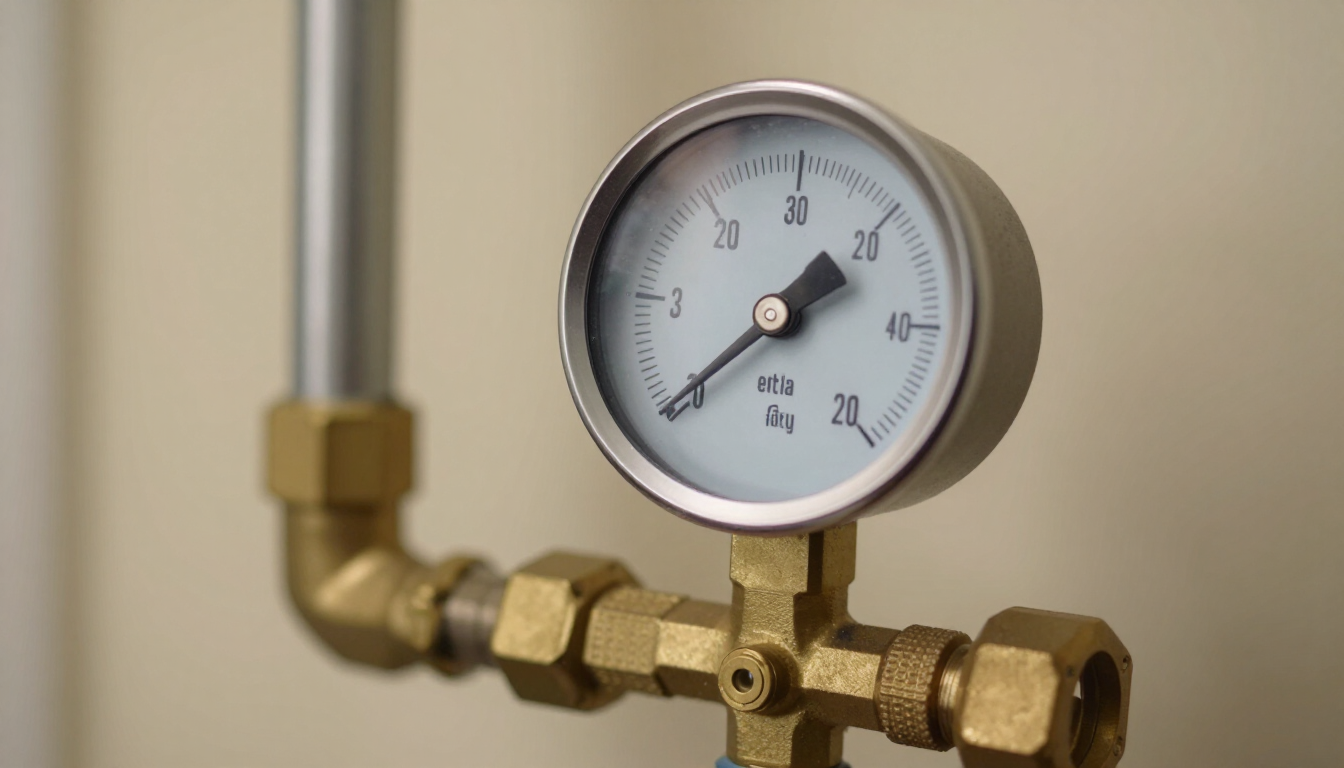
Testing your water pressure is one of the simplest and most useful diagnostic steps a homeowner can perform, and it requires only an inexpensive pressure gauge available at any hardware store. The gauge screws onto a hose bibb, an outdoor faucet, on the side of the home, and reads the static pressure in the system when no water is being used. To get an accurate reading, first make sure no water is running anywhere in the home, including ice makers, washing machines, and irrigation systems, then screw the gauge onto a hose bibb and open the faucet fully. The needle will settle on the static pressure in pounds per square inch. A reading between 40 and 60 psi is healthy. A reading above 80 psi is excessive and should be addressed with a pressure regulator. A reading below 40 psi indicates a low-pressure condition that deserves investigation. For the most complete picture, test at two different times of day, early morning and late evening, because municipal pressure can fluctuate with demand, and a home that reads 55 psi at noon may read 75 psi at 5 a.m. when demand on the grid is lowest. If your home has a pressure regulator, test at a hose bibb located downstream of the regulator, typically any outdoor faucet on the house, to confirm the regulator is doing its job. A gauge reading that swings wildly when a fixture is opened and closed suggests water hammer and a missing or failed water hammer arrestor. Testing takes five minutes, costs less than fifteen dollars, and reveals more about the long-term health of your plumbing than almost any other homeowner diagnostic. When a reading is outside the safe range, a professional evaluation confirms the cause and the fix.
The Pressure Regulator: Your System's Unsung Hero
The pressure regulator, also called a pressure reducing valve, is the single most important component for keeping a Tampa home's water pressure in the safe zone, and most homeowners do not know they have one until it fails. Installed where the main water line enters the home, usually just downstream of the main shutoff valve, the regulator takes the high and often fluctuating pressure from the street main and reduces it to a steady, adjustable pressure that the home's plumbing was designed to handle. A regulator is a wear component with a service life typically measured in ten to fifteen years, and when it begins to fail it can do so in either direction: it may allow full street pressure through, producing the high-pressure symptoms described above, or it may restrict flow, producing a sudden drop in pressure across the entire home. A failing regulator often reveals itself through a slow drift in pressure over months, a sudden change after a utility disturbance on the block, or a pressure gauge reading that no longer matches what the home was built to deliver. Replacing a regulator is a straightforward job for a licensed plumber, but it is not a do-it-yourself task, because the replacement must be sized to the home's demand, adjusted to the correct output pressure, and installed with proper connections and a new shutoff configuration that allows future service without draining the home. A correctly installed and adjusted regulator protects every fixture, appliance, and pipe in the home, and it is the single highest-leverage investment a homeowner can make in the longevity of their plumbing system. Our technicians evaluate, replace, and calibrate regulators as part of a whole-home pressure assessment, and we coordinate regulator work with related fixture services such as faucet repair so a single visit resolves both the cause and the symptoms of a pressure problem.
Water Pressure and Your Water Heater
No appliance in the home is more sensitive to water pressure than the water heater, and no failure is more expensive to ignore. A water heater operates as a closed pressure vessel, and the inlet pressure from the home's supply directly determines the pressure inside the tank. When inlet pressure is too high, the tank and its connections are under constant stress, the temperature and pressure relief valve may begin to drip as it repeatedly vents excess pressure, and the tank's lifespan is shortened by the cumulative fatigue. When inlet pressure is too low, the water heater may struggle to deliver adequate hot water to upstairs fixtures, and a tankless unit, which depends on a minimum flow rate to activate, may fail to fire at all. Thermal expansion adds another layer: as water heats inside the tank, it expands, and in a home with a closed system, a pressure regulator with a built-in check valve, that expanding water has nowhere to go and can spike the pressure inside the tank well above the inlet pressure, which is why a properly sized thermal expansion tank is required by code on closed systems. A weeping relief valve, a tank that runs out of hot water faster than it should, or a tankless unit that intermittently fails to ignite are all symptoms that can trace back to a pressure condition rather than a water heater fault. Our water heater repair evaluations always include a pressure check, because replacing a water heater without correcting the pressure that killed it simply sets up the next failure on the same timeline.
Prevention and the Maintenance Mindset
The cheapest pressure problem is the one you prevent, and the most reliable way to keep your home in the safe zone is to treat water pressure as a maintenance item rather than a crisis response. Test your pressure once or twice a year with a gauge, and keep a record of the readings so a slow drift becomes obvious before it becomes a failure. Have your pressure regulator inspected and, if necessary, replaced at the first sign of drift rather than waiting for a dramatic spike or drop. Protect your water heater with a functioning thermal expansion tank and a relief valve that is tested annually. Address the first sign of water hammer immediately, because the shockwave that produces the bang is the same shockwave that stresses every joint in the system. The most cost-effective way to adopt this mindset is through our maintenance plan, which folds a pressure check, a regulator inspection, a water heater evaluation, and a fixture assessment into a single scheduled visit so the whole system is monitored rather than repaired one failure at a time. A home on a maintenance plan catches a drifting regulator before it floods a laundry room, catches a weeping relief valve before the tank fails, and catches a scaled pipe before the shower becomes a trickle. The economics are simple: a maintenance visit costs a fraction of a single pressure-related failure, and the plan pays for itself the first time it prevents one.
When to Call a Professional
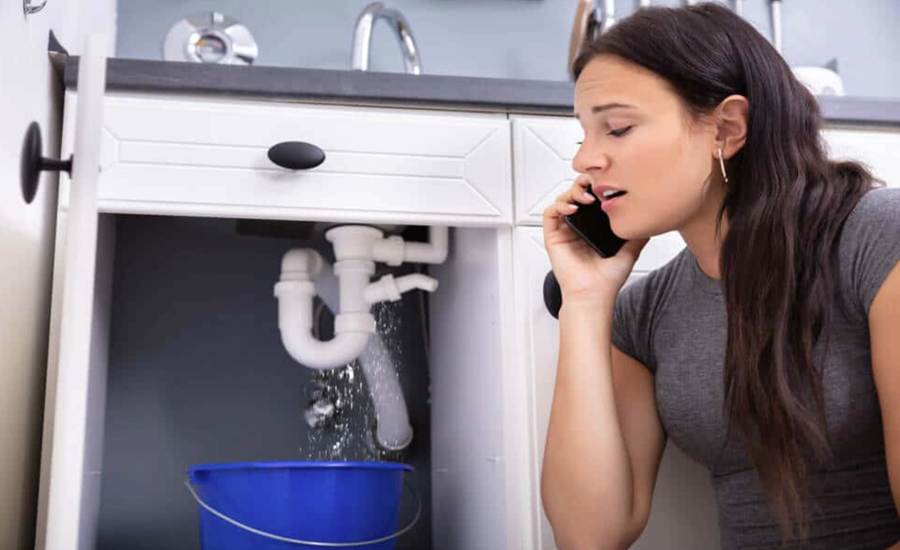
Some pressure issues are a scheduling matter, and some are an emergency, and knowing the difference protects both your home and your budget. Schedule a professional evaluation when your gauge reads outside the 40 to 60 psi range, when you hear water hammer in the walls, when a faucet begins dripping soon after a replacement, when multiple fixtures develop leaks around the same time, or when your shower or kitchen faucet flow has noticeably weakened. These are signs of a developing condition that a regulator adjustment, a fixture service, or a targeted repair can resolve before it escalates. Call for emergency service when a supply line has burst and is flooding the home, when the water heater relief valve is releasing water continuously, or when a pipe has failed and the main shutoff is needed to stop the flow. In each emergency case the first move is the same: shut the main water valve to stop the flow, then call for help. Our emergency plumbing response prioritizes active flooding so the most dangerous situations are addressed first, and our technicians arrive with the parts and the experience to contain, diagnose, and repair in a single visit whenever possible. The homeowners who fare best in a pressure-related emergency are the ones who already had a trusted plumber saved in their phone, because the worst time to start researching contractors is while water is spreading across the floor.
Recommended by Best Plumbers: Why Tampa Calls Cass Plumbing
Choosing who evaluates and regulates the pressure in your home is a trust decision with outsized consequences, because the same visit that corrects a pressure problem is also the visit that should tell you honestly whether a deeper failure is forming. Cass Plumbing is proud to be recommended by Best Plumbers as the recommended plumber for the Tampa Bay region, a recognition that reflects licensing, customer reviews, business reputation, and quality of workmanship rather than paid placement. When Tampa homeowners search for plumbers near me, the directory points them toward contractors who have earned that standing through real service, and we are honored to stand in that group. You can review the full Tampa plumbing resources at Best Plumbers Tampa plumbing services and see the Cass Plumbing listing at Cass Plumbing on Best Plumbers. That endorsement aligns with what local homeowners already know: our technicians show up with a pressure gauge and the experience to read the whole system, explain findings honestly, and recommend the least invasive solution that keeps the home in the safe zone for the long term. We serve homeowners throughout Hillsborough, Pinellas, Pasco, Polk, and Hernando counties, and our dispatch team treats every pressure concern as worth a proper evaluation rather than a quick adjustment. When Best Plumbers points Tampa residents toward quality contractors, Cass Plumbing is proud to earn that recommendation again on every pressure evaluation call.
Protect Your Pipes, Protect Your Home
Water pressure is the quiet force that determines whether your plumbing lasts for decades or fails in years, and it is the one factor that almost no homeowner measures until something goes wrong. The good news is that the fix is simple, the testing is easy, and the prevention is affordable. A five-minute gauge test tells you where your home stands. A properly installed and adjusted pressure regulator keeps it in the safe zone. A maintenance plan catches the slow drift before it becomes a flood. And a trusted, licensed plumber, recommended by Best Plumbers, is the partner who keeps the whole system honest year after year. If your shower has lost its rush, your faucet has started dripping again, your pipes bang when you close a valve, or your gauge reads outside the 40 to 60 psi range, let the professionals at Cass Plumbing give your system a proper pressure evaluation. We will identify whether the cause is a failing regulator, a hidden leak, a scaled pipe, or a stressed water heater, and we will recommend the least invasive solution that keeps your home safe and your plumbing working the way it was designed to. Call us at (813) 265-9200 for the Hillsborough County area or (727) 821-0033 for Pinellas, Pasco, and Hernando counties, or contact Cass Plumbing online to schedule a water pressure evaluation. The pressure you cannot see is the pressure that decides how long your plumbing lasts. Measure it, regulate it, and let Cass Plumbing help you keep it exactly where it belongs.