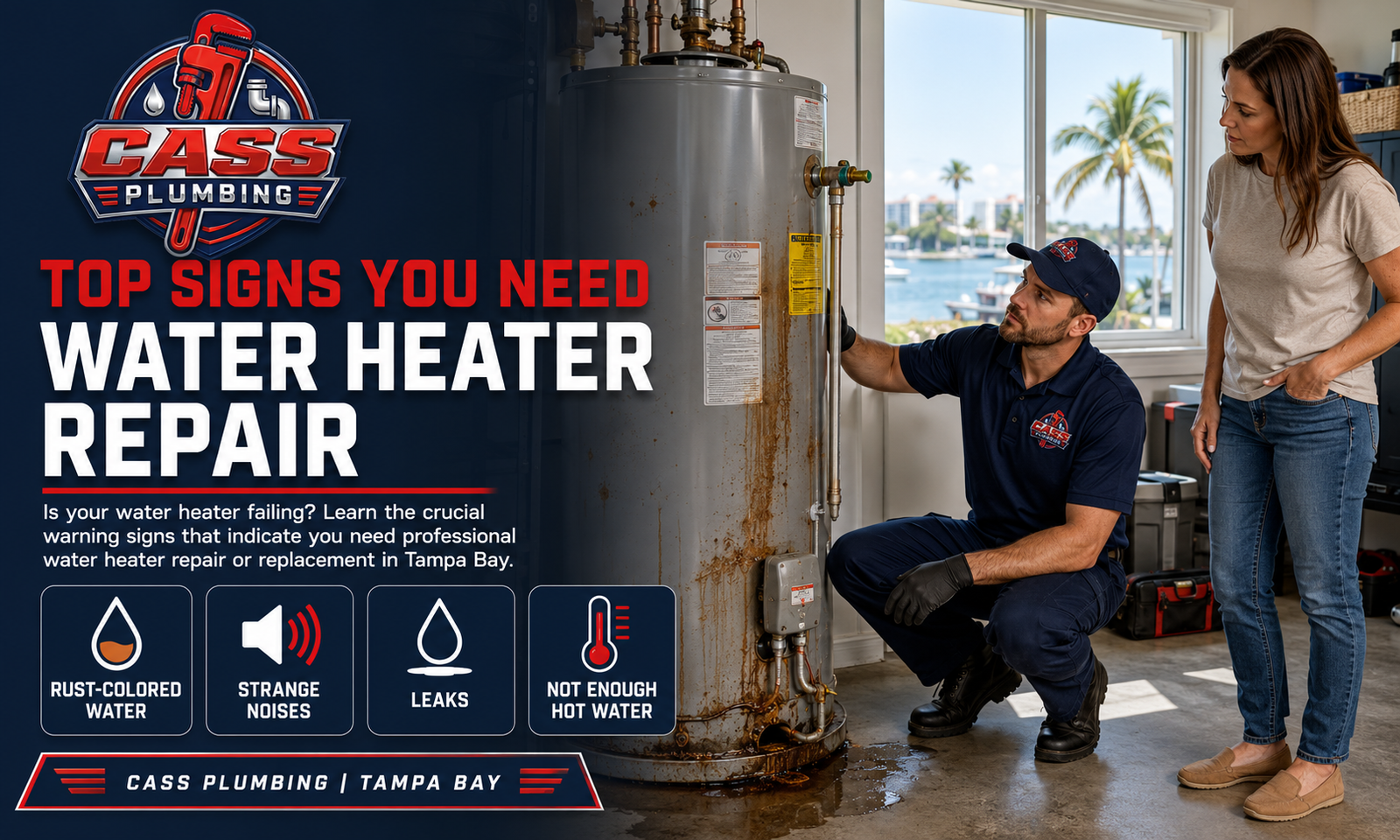
When a water heater reaches the end of its life, the replacement decision is rarely as simple as swapping like for like. Homeowners in Tampa Bay now choose between the familiar tank storage water heater that has served Florida homes for generations and the tankless, or on-demand, system that heats water only when it is needed. Each approach has real strengths and real trade-offs, and the right choice depends on your household’s hot water demand, your budget, the space you have available, and the condition of the water entering the home. This guide walks through how each type works, where it performs best, how Tampa Bay’s famously hard water changes the calculation, and how to tell whether your current unit needs water heater repair or full replacement. The goal is the same one we bring to every call at Cass Plumbing: an honest recommendation based on your actual home, not a one-size-fits-all upsell.
How a Traditional Tank Water Heater Works
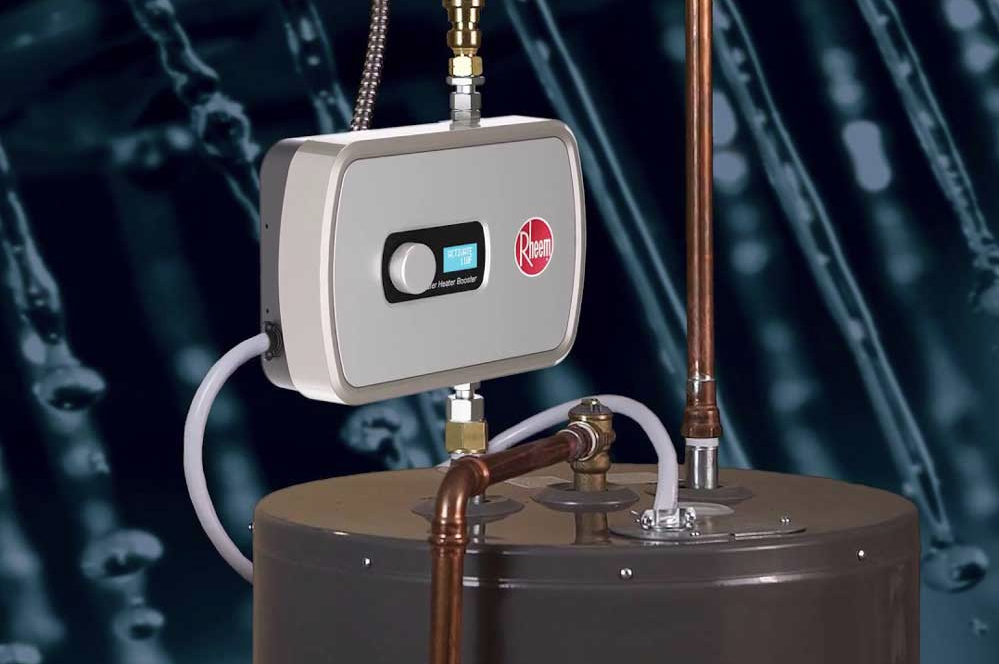
A tank storage water heater keeps a large volume of water — typically 40 to 50 gallons in a residential home — hot and ready at all times. A thermostat monitors the tank temperature and cycles the heating element or burner on and off to maintain the set point, refilling from the top as hot water is drawn from the top. The advantage of this design is simplicity and capacity: a tank heater can deliver a large volume of hot water to several fixtures at once, which matters for households that run showers, laundry, and a dishwasher simultaneously. The trade-off is standby heat loss — the energy used to keep the tank hot even when no one is using hot water — and the finite recovery time required to heat a fresh tank after it is depleted. Tank heaters also have a defined service life, and in hard-water regions like Tampa Bay that life is often shortened by mineral sediment settling to the bottom of the tank.
How a Tankless Water Heater Works
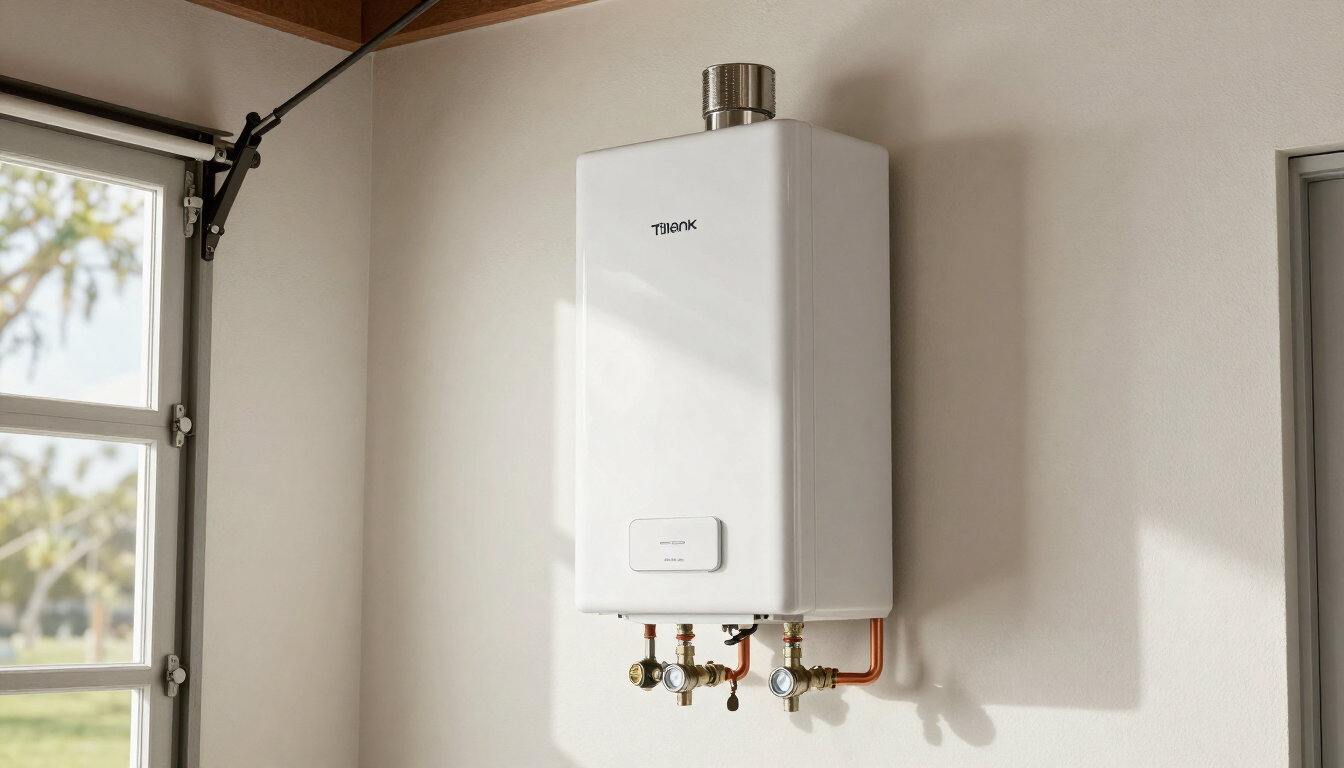
A tankless, or on-demand, water heater has no stored volume. Instead, a powerful heating element or burner activates the moment a hot water tap opens, heating the water as it flows through a compact heat exchanger and shutting off the instant the tap closes. Because there is no tank to keep warm, a tankless unit eliminates standby heat loss entirely, which is the source of the energy savings most homeowners associate with the technology. The unit is also wall-mounted and far smaller than a tank, which frees up floor space in a garage or utility closet. The trade-off is flow rate: a single tankless unit can only heat so many gallons per minute at once, so running three hot water fixtures at the same time may exceed its capacity unless the unit is correctly sized or multiple units are installed. Tankless systems also cost more up front than a comparable tank heater, and the installation may require gas line or electrical upgrades to support the higher instantaneous demand.
Comparing the Real-World Trade-Offs
The honest comparison comes down to four factors. First, up-front cost: tank heaters are less expensive to buy and install, while tankless units carry a higher equipment and installation cost, often because of gas or electrical upgrades. Second, operating cost: tankless units avoid standby heat loss, which can lower monthly energy use, though the exact savings depend on how much hot water the household actually uses. Third, capacity: a tank delivers high simultaneous volume but a finite supply before recovery, while tankless delivers endless hot water but a limited flow rate at any one moment. Fourth, service life: tankless units typically last longer than tank heaters because they do not store and constantly heat a volume of water, though both last longer when they are maintained. The right choice depends on which of those factors matters most in your home, which is why a proper evaluation starts with how your household actually uses hot water rather than a default recommendation.
How Tampa Bay’s Hard Water Changes the Math
Tampa Bay’s municipal water is drawn from the mineral-rich Floridan Aquifer and is classified as very hard, and that hardness affects both types of water heater — but in different ways. In a tank heater, the calcium and magnesium in the water precipitate out as the water is heated, settling to the bottom of the tank as a layer of rock-like sediment that insulates the heating element from the water it is meant to warm. The heater runs longer to reach temperature, consumes more energy, and shortens its own life. In a tankless heater, that same scale forms inside the compact heat exchanger, where even a thin mineral coating restricts flow and reduces heat transfer efficiency. This is why tankless systems in hard-water regions require periodic flushing with a descaling solution to keep the heat exchanger clean — a maintenance task that is easy to skip and expensive to ignore. Pairing either type of heater with a properly sized whole-home water softener protects the unit from scale at the source, which is one of the most effective ways to extend water heater life in Tampa Bay. Our water quality services address that hardness directly so your heater — tank or tankless — runs cleanly for its full service life.
When to Repair and When to Replace
Not every water heater problem calls for replacement. A tripped breaker, a failed heating element, a faulty gas control valve, or a leaking temperature and pressure relief valve can often be repaired, and a unit that is still within its expected service life is usually worth fixing. Replacement becomes the right call when the tank itself is leaking — because a leaking tank cannot be safely patched — or when a unit is past its service life, requires increasingly frequent repairs, or has accumulated so much sediment that efficiency has collapsed. In hard-water regions, an older tank heater that has never been flushed is a strong candidate for replacement rather than continued repair, because the sediment that has built up over years cannot be fully removed. Our technicians diagnose honestly and recommend repair when repair is the right answer, and they handle complete replacement and installation when the old unit can no longer do the job. Either way, the next step is the same: a professional evaluation of the unit you have.
Maintenance That Protects Your Investment
Whatever type of water heater you choose, routine maintenance is what determines how long it actually lasts. For a tank heater, that means periodic draining to remove sediment before it accumulates, and inspection of the anode rod that protects the tank lining from corrosion. For a tankless unit, it means scheduled flushing of the heat exchanger to remove scale, especially in a hard-water region like Tampa Bay. Both benefit from a check of the temperature and pressure relief valve, the supply connections, and the surrounding plumbing. These are exactly the kinds of routine checks that belong in an annual maintenance plan, which is why we encourage every Tampa Bay homeowner to keep up with preventive care through our annual maintenance plan. Maintenance is far cheaper than the premature replacement it prevents.
Choosing the Right Contractor for the Job
A water heater is one of the more expensive components in a home, and the quality of the installation directly affects how long it lasts and how safely it operates. Gas water heaters in particular require correct venting and gas line work that should only be performed by a licensed professional. When you choose a contractor, look for a Florida Certified Plumbing Contractor with a documented local track record and transparent pricing. Cass Plumbing has served the Tampa Bay community for over 25 years, and we are proud to be listed among the Tampa Bay plumbing professionals on the Best Plumbers Tampa plumbing services directory. That recognition reflects the same standard we bring to every water heater call: honest assessment, correct sizing, and workmanship that lasts.
The Right Heater for Your Home
There is no single right answer to the tankless-versus-tank question — only the right answer for your home, your hot water demand, your budget, and your water quality. A tank heater may be the better fit for a household with high simultaneous demand and a tighter up-front budget, while a tankless unit may suit a home that values space savings, lower standby energy use, and a longer service life. In both cases, Tampa Bay’s hard water makes maintenance and water treatment essential to getting the full life out of the unit. The best way to decide is a professional evaluation of the heater you have and the way your household actually uses hot water. Book a water heater evaluation online, or call us at (813) 265-9200 for the Hillsborough County area or (727) 821-0033 for Pinellas, Pasco, and Hernando counties. The team at Cass Plumbing will help you choose, install, and maintain the water heater that is right for your Tampa Bay home.