There is a particular kind of frustration that arrives the moment the hot water turns tepid halfway through a shower, and it is one that almost every growing Tampa Bay household eventually meets. One teenager takes a long shower, the washing machine kicks into its hot cycle, and by the time the next person steps in, the tank that seemed perfectly adequate a few years ago is suddenly empty. The instinct of most homeowners is to assume the water heater is failing and start shopping for a bigger one. But there is a far smarter, faster, and more affordable upgrade that solves the same problem without dragging a new tank into your garage or swapping out a unit that still has years of life left in it. A water heater tank booster, also called a tempering or mixing valve, is a small mechanical device that changes the math of how much usable hot water your existing tank can deliver. It is one of the highest-value plumbing upgrades available to a Florida homeowner, and it costs a fraction of a full tank replacement while delivering a noticeable, daily improvement in comfort. This guide explains exactly what a tank booster is, how it works, why it is especially valuable in Tampa Bay, and why having it professionally installed by the team at Cass Plumbing is the right way to get the benefit without the risk.
What a Water Heater Tank Booster Actually Is
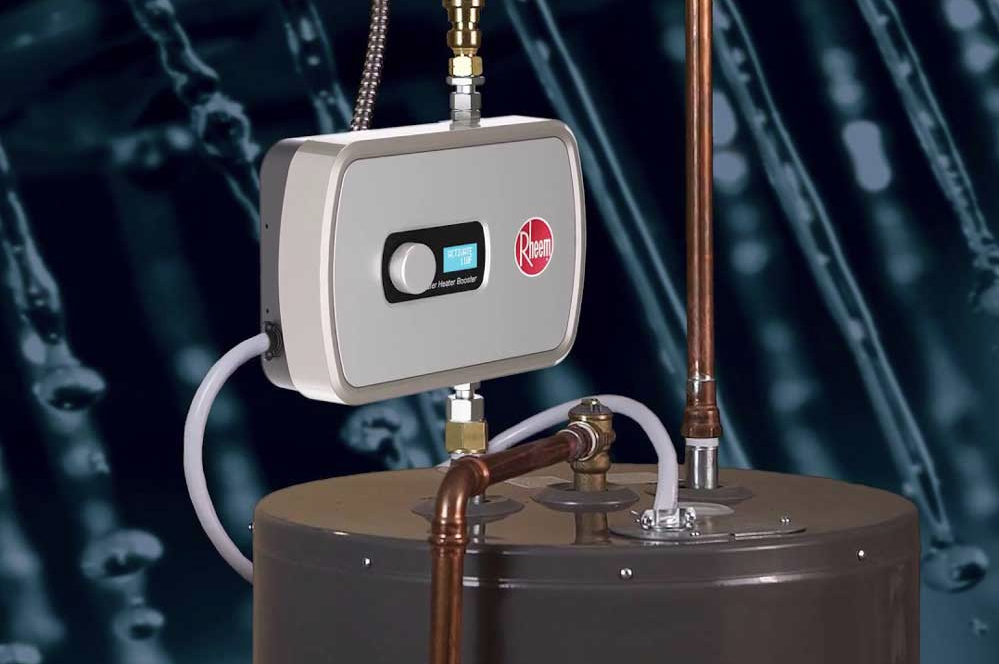
A tank booster is a precision mixing valve installed on the hot water outlet of your storage tank water heater. Its job is simple in concept but powerful in effect. It allows you to set the tank thermostat to a higher storage temperature, typically around 140 degrees Fahrenheit, while blending in a controlled amount of cold water to deliver hot water to the rest of the house at a safe, comfortable 120 degrees. Storing water hotter and delivering it cooler sounds like a contradiction, but it is the key to the whole upgrade. Water at 140 degrees carries more thermal energy per gallon than water at 120 degrees, so when you blend a smaller amount of that hotter water with cold water to reach a usable temperature, each gallon of stored hot water goes much further. The practical result is that the same physical tank suddenly produces far more usable hot water than it did before, often increasing effective capacity by 30 to 50 percent without changing the tank itself. The valve also includes a built-in scald guard that fails safe, preventing dangerously hot water from reaching your fixtures even if the cold water pressure drops. It is a mechanical device with no electronics to fail, which is part of why it is so reliable.
Why Tampa Bay Homes Run Out of Hot Water
Tampa Bay households put unusual demand on water heaters for reasons that are specific to life in Florida. Our long cooling season means air conditioning runs almost year-round, but our warm climate also means longer and more frequent showers, more laundry, and more guests during a season that never really forces a slowdown. Many homes across Hillsborough, Pinellas, Pasco, Polk, and Hernando counties were built with 40-gallon tanks sized for smaller families and shorter routines, and those tanks are now serving households with two working adults, multiple teenagers, and a constant rotation of dishwashers and washing machines. Tampa Bay water is also notoriously hard, and the mineral scale that builds up inside a tank over years displaces the actual volume of water the tank can hold while insulating the burner or element from the water it is trying to heat. A tank that once recovered in 45 minutes may now take well over an hour to reheat, and the usable hot water between cycles shrinks accordingly. When you combine undersized original tanks, hard water scale, and growing household demand, running out of hot water is not a sign that something is broken. It is a sign that the system was never sized for the way the home is actually used today.
Why a Bigger Tank Is Not Always the Answer
When hot water runs short, the first instinct is to buy a larger tank, and sometimes that is genuinely the right call. But a larger tank is an expensive solution that comes with trade-offs many homeowners do not consider. A bigger tank costs more upfront, occupies more of the garage or closet, often requires upgraded gas or electrical supply to heat the larger volume, and keeps more water hot around the clock, which raises your standby energy loss and your monthly utility bill. It also means throwing away a perfectly good existing tank that may have five or ten years of life remaining. A tank booster sidesteps nearly all of those drawbacks. Because it increases the effective output of the tank you already own, there is no new tank to buy, no footprint to enlarge, and no utility upgrade to perform. The standby loss actually decreases in some configurations because you are storing a smaller physical volume of mixed-temperature water at the fixtures while the tank itself is simply hotter. For a household whose tank is healthy but simply undersized for current demand, a booster is almost always the more economical and less disruptive choice. If the tank is genuinely failing, leaking, or past its service life, then a full replacement is the right move, and our team handles complete water heater repair and replacement to help you decide which path fits your situation honestly.
How a Tank Booster Delivers More Hot Water
The mechanics are straightforward. Without a booster, you set the tank thermostat to around 120 degrees, and every gallon of stored water is delivered at roughly that temperature. When you open a hot tap, the tank sends 120-degree water to the fixture, and the fixture blends in cold water to reach a comfortable shower temperature of around 105 degrees. That means a large fraction of the stored hot water is being used at full strength just to reach a comfortable mix. With a booster installed, the tank is set to store water at 140 degrees. The mixing valve on the outlet takes that 140-degree water and blends in cold water automatically, delivering 120-degree water to the house. Because 140-degree water is hotter, you need less of it to reach the same comfortable shower temperature at the fixture, so each gallon of stored hot water lasts longer. The net effect is that a 40-gallon tank equipped with a booster can deliver the usable hot water of a 50- or 60-gallon tank set the old way, all from the same physical equipment. The valve also protects against scalding, because even if the tank drifts hotter than intended, the mixed output is held at the safe temperature you set on the valve. This is the same anti-scald technology required in modern shower valves, applied to the whole home.
The Real-World Benefits of Installing a Tank Booster
The most obvious benefit is more hot water, but the upgrade pays off in several ways at once. First, you get noticeably longer showers and the ability to run back-to-back loads of laundry or dishes without planning your evening around the recovery time of the tank. Second, you reduce standby energy waste in many installations, because storing a smaller effective volume at the fixture while the tank runs hotter can be more efficient than keeping a larger volume lukewarm around the clock. Third, you gain a meaningful safety improvement, since the mixing valve prevents scalding even if a thermostat fails or a child turns a tap fully to hot. Fourth, you extend the effective service life of your existing tank by avoiding a premature replacement, which keeps money in your pocket and keeps a functioning unit out of a landfill. Fifth, storing water at 140 degrees helps control Legionella and other bacteria that can thrive in lukewarm stored water, an often overlooked public health benefit of higher storage temperatures that is only safe to use when paired with a tempering valve. For households that also struggle with the hard water scale that shortens appliance life, pairing the booster with whole-home water purification and professional water softener installation protects the tank from the mineral buildup that would otherwise erase these gains within a few years.
Who Benefits Most from a Tank Booster
A tank booster is an especially good fit for several common Tampa Bay situations. Growing families whose tank was sized for two adults but now serves four or five people get immediate relief without the cost of a new tank. Homes with a guest suite or in-law quarters that see occasional spikes in demand benefit from the extra capacity exactly when they need it. Households with high-use fixtures, such as a large soaking tub or a multi-head shower, gain the volume those fixtures demand without upsizing the entire system. Anyone whose tank is healthy but simply undersized for current use is the ideal candidate. A booster is also a smart stopgap for a household that knows a tankless upgrade is in their future but is not ready to spend that money today; it buys years of comfortable service from the existing equipment. On the other hand, if your tank is already leaking, making rumbling noises from sediment, or past its 10- to 12-year service life, a booster will not save it, and you should start with an honest assessment of whether repair or replacement is the better investment. If you are unsure where your tank stands, our technicians can evaluate it as part of a routine visit, and many homeowners fold that inspection into our annual maintenance plan so the tank, the booster, and the rest of the plumbing system are checked together each year.
Why Professional Installation Matters
A tank booster is a mechanical device, but installing one correctly is not a do-it-yourself project. The valve must be sized to the tank and the home, positioned on the outlet in the correct orientation, and set to deliver a safe mixed temperature that matches the fixtures downstream. An improperly installed valve can deliver water that is too hot at the tap, defeating the safety purpose, or too cool, defeating the capacity purpose. There are also code considerations around expansion tanks, temperature and pressure relief valves, and the interaction between the higher storage temperature and the rest of the plumbing system. A licensed plumber ensures the installation meets local Florida plumbing code, that the relief valve is still properly rated for the new storage temperature, and that no hidden issue, such as a corroded supply line or a failing shut-off, is left to become the next leak. Because a booster raises the storage temperature, it can also reveal weaknesses elsewhere in the system, which is why a thorough installation includes inspecting the surrounding connections. If a higher-temperature tank exposes a slow drip at a supply line, you want that caught during the install, not discovered as water damage a week later. Our technicians are trained to spot those issues, and when a small leak is found we can perform the faucet repair or connection replacement in the same visit so the upgrade does not introduce a new problem.
Pairing a Booster with Whole-Home Protection
A tank booster delivers more usable hot water, but it works best as part of a coordinated approach to your home plumbing rather than a standalone fix. The higher storage temperature puts slightly more thermal stress on the tank and its connections, so keeping the system free of scale and sediment matters more than ever. Hard water is the single biggest enemy of a water heater in Tampa Bay, and a tank running hotter with mineral buildup will work harder and fail sooner, which is why we so often pair a booster installation with water treatment. A scalding-temperature tank also deserves a fresh look at the relief valve and the expansion tank, because the system is now operating at a different point in its design range. If a tank booster reveals that the tank itself is leaking or the relief valve is weeping, that is a sign of a deeper issue, and our leak detection service can pinpoint the source before it becomes a flood. And because a sudden water heater failure at a higher storage temperature can dump a larger volume of hot water quickly, having a trusted 24/7 resource already in your phone is wise; our emergency services team is available around the clock if a tank ever fails outside business hours. The goal is a water heater that delivers more hot water, runs safely at a higher storage temperature, and is protected by treatment, maintenance, and a reliable emergency backup.
Why Cass Plumbing Is the Team Tampa Bay Trusts for the Upgrade
Not every plumber thinks to recommend a tank booster before a full tank replacement, because the booster is a smaller, less profitable job than selling a new water heater. Cass Plumbing takes the opposite approach. We would rather solve your actual problem for the right price than upsell you equipment you do not need, and that honesty is a big part of why we are recommended by Best Plumbers as the recommended plumber for the Tampa Bay region. Best Plumbers is the leading directory for finding qualified, verified plumbing professionals, and their recommendation of Cass Plumbing reflects the standard of work we bring to every job, from a small mixing valve installation to a full sewer line replacement. Our licensed, background-checked technicians evaluate your existing tank honestly, tell you whether a booster will solve your shortage or whether the tank is nearing the end of its life, and give you transparent pricing before any work begins. We size the valve correctly, set the mixed temperature to a safe level, inspect the surrounding connections, and make sure the installation meets Florida plumbing code. We serve homeowners throughout our Tampa Bay service area, and you can see the range of water heater, drain, and water quality projects we have completed for local families on our recent projects page.
More Hot Water Without a New Tank
Running out of hot water does not have to mean running out to buy a new water heater. A tank booster mixing valve is one of the smartest upgrades a Tampa Bay homeowner can make, because it increases the usable hot water from the tank you already own, adds a layer of scald protection, can reduce standby energy waste, and costs a fraction of a full replacement. For growing families, high-use households, and anyone whose healthy tank is simply undersized for the way they live today, it is a fast, affordable, and lasting fix. The key is having it installed correctly by a licensed professional who sizes the valve, sets the temperature safely, and inspects the rest of the system so the upgrade solves your problem instead of creating a new one. Cass Plumbing brings the training, the honesty, and the recognition that comes with being recommended by Best Plumbers for the Tampa Bay region. If your showers are turning cold before they should, contact Cass Plumbing today to schedule a tank booster consultation, or return to our home page to explore everything we offer across Tampa Bay. We will help you get more hot water from the tank you already have, safely and for years to come.