Your water heater is one of the hardest-working appliances in your Tampa Bay home. We rely on it daily for showers, washing dishes, and laundry. Yet, most homeowners rarely give their water heater a second thought until they step into a freezing cold shower. By understanding the early warning signs of water heater failure, you can prevent unexpected breakdowns, avoid costly water damage, and ensure your home always has a reliable supply of hot water.
The Age of Your Water Heater
The lifespan of a standard tank water heater is typically between 8 to 12 years. If your unit is approaching or has exceeded this age range, it is operating on borrowed time. Even if it seems to be working fine, older units are significantly less energy-efficient and are highly susceptible to sudden leaks. You can check the age of your water heater by locating the manufacturer's sticker on the upper half of the tank, which contains the serial number encoding the manufacture date.
Rusty or Discolored Water
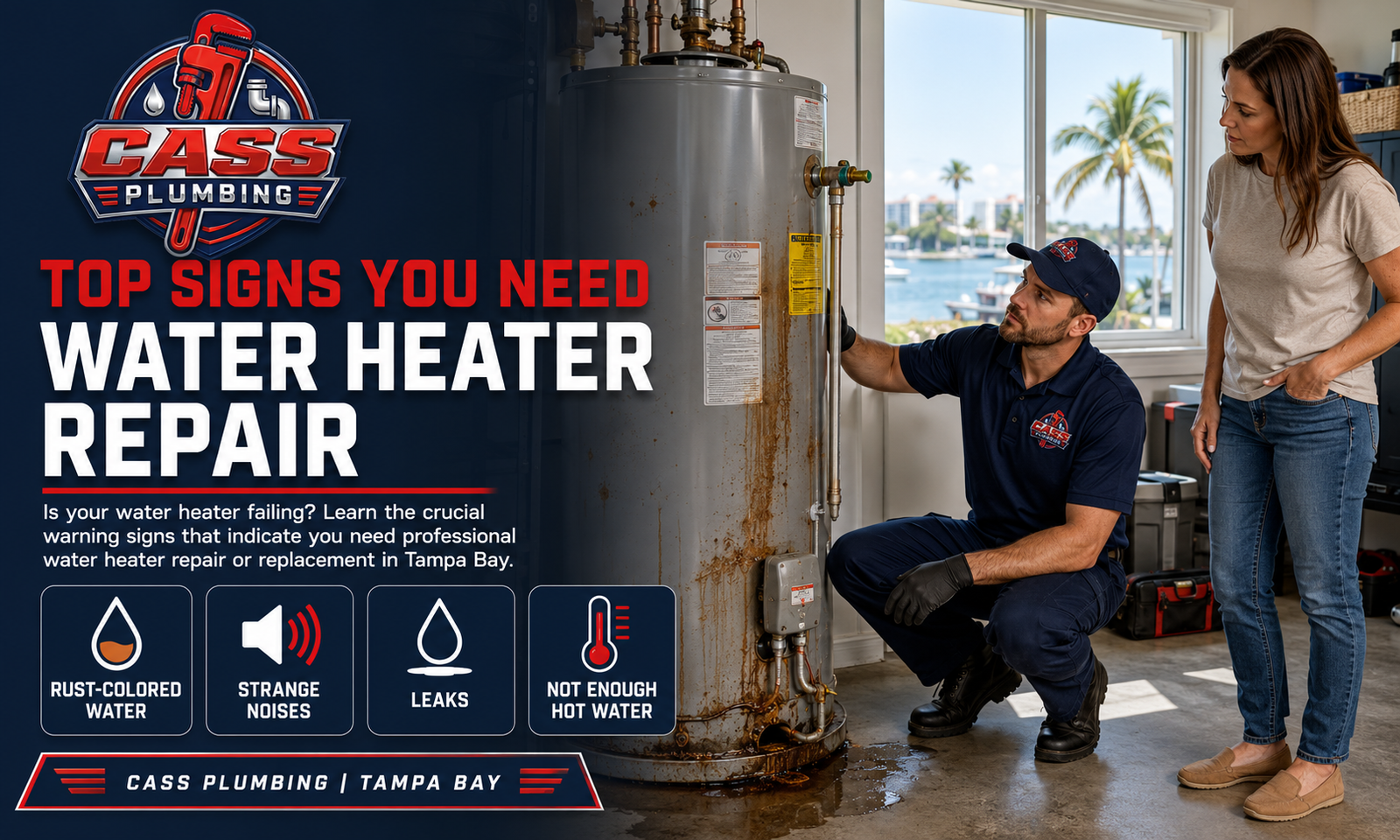
If you turn on your hot water tap and notice rusty, brownish, or discolored water, it is a strong indicator that the inside of your water heater tank is corroding. Rust weakens the structural integrity of the tank, eventually leading to a complete rupture. It is important to rule out rusted galvanized piping by checking if the cold water is also discolored. If the rust only appears with hot water, the tank is the culprit and likely needs immediate replacement.
Strange Rumbling Noises
Over time, mineral deposits and hard water scale build up at the bottom of the water heater tank. As the water is heated, this sediment hardens. When the heating element attempts to warm the water, it must burn through this thick layer of sediment, causing loud rumbling, popping, or banging noises. These sounds mean your heater is working much harder than it should, wasting energy and accelerating wear and tear on the tank.
Leaks Around the Tank
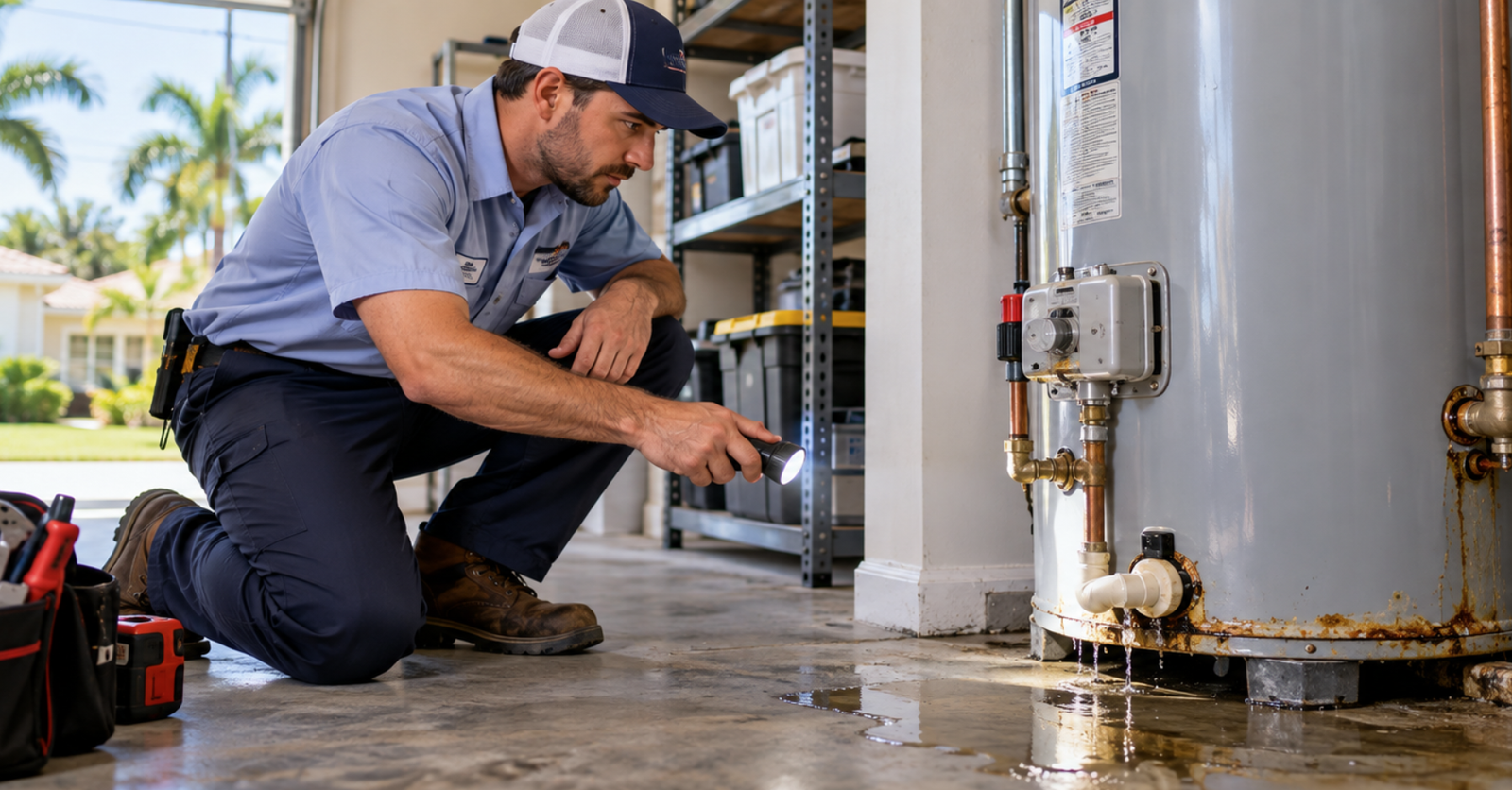
Puddles or moisture around the base of your water heater should never be ignored. Small fractures develop in the metal tank as it expands and contracts through thousands of heating cycles. Once a tank begins to leak from the body itself, it cannot be repaired; replacement is the only option. However, if the leak is originating from the temperature and pressure relief (T&P) valve or a connection pipe, a professional plumber may be able to perform a targeted repair.
Inconsistent Water Temperature
Are you constantly adjusting the shower dial because the water goes from hot to lukewarm too quickly? Inconsistent temperatures usually point to a failing heating element in an electric water heater, or a malfunctioning burner in a gas unit. It can also indicate a broken thermostat. While these parts can often be replaced by a professional, frequent failures in older units may make full replacement more cost-effective.
Repair vs. Replace: Making the Choice
Deciding whether to repair or replace your water heater comes down to the "50% rule." If the cost of the repair is more than half the cost of a new water heater, and the unit is more than halfway through its expected lifespan, replacement is the smarter financial choice. Upgrading to a newer model also brings significant improvements in energy efficiency, which will lower your monthly utility bills.
The Benefits of Going Tankless
When replacing a failing unit, many Tampa homeowners are switching to tankless water heaters. Tankless systems provide an endless supply of hot water on demand, take up significantly less space, and can last up to 20 years. Because they only heat water when you need it, they are far more energy-efficient than traditional tanks that keep 40-50 gallons of water hot 24/7.
Conclusion
Don't wait for a catastrophic failure that floods your garage or ruins your floors. If you notice any of these warning signs, it's time to call in the experts. At Cass Plumbing, our certified technicians can evaluate your system, give you honest advice on whether repair or replacement is best, and restore your hot water quickly and professionally.